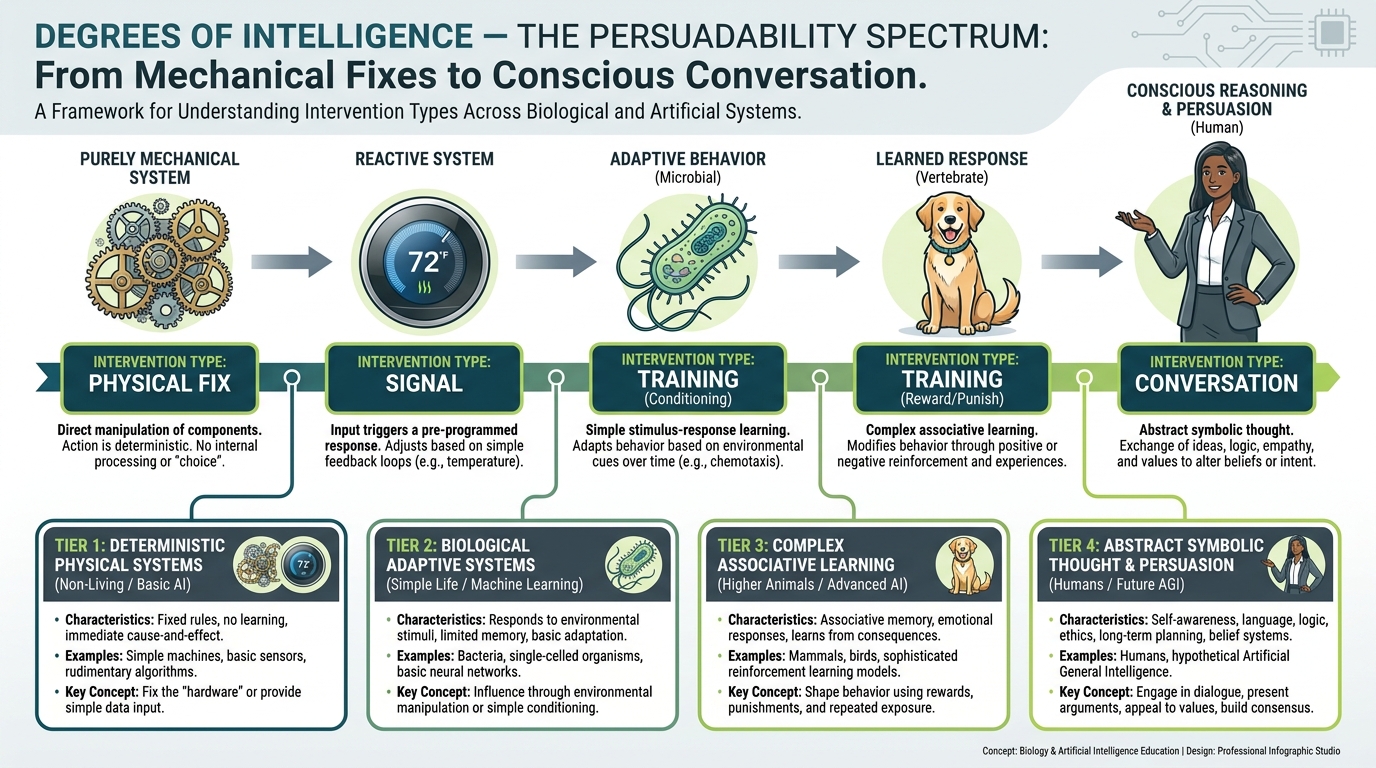
Figure 1:The persuadability spectrum. Every system sits somewhere on it. Pick the intervention that matches where it sits — not the one you’re most comfortable with.
Your clock stopped. You open the back and move a gear.
Your dog won’t stop jumping on guests. You can’t open the back and move a gear. You have to train him. That takes weeks of repeated signals, rewards, and timing.
Your teenager won’t stop staying up until 2 AM. You can’t reprogram him. You can’t really train him either. You have to talk. You make your case. He might agree. He might not.
Three problems. Three completely different approaches. And here is the key: each approach works because of what the system is, not just what you prefer. Swap the tools and everything breaks. Try to train the clock and nothing happens. Try to move a gear in your teenager and you will need a lawyer.
The degree of smartness tells you what kind of intervention actually lands.
1The Persuadability Spectrum
We have been using the wrong labels.
Smart. Dumb. Intelligent. Primitive. These words feel like they mean something. They don’t — not when you need to actually change a system’s behavior.
Call a dog smart and you still don’t know whether to retrain it, rewire it, or have a conversation with it. Call an AI agent dumb and you still don’t know whether the problem is its weights, its prompt, or its environment. The label names a property. It says nothing about the lever.
The persuadability spectrum is the escape hatch.
It does not ask how intelligent a system is. It asks what kind of intervention reaches it.
That is a different question — and it has a different answer for every system you will ever work with. Get the intervention wrong and you don’t just fail. You actively make things worse. You demote a capable system by treating it like a gear. You waste effort reasoning with something that cannot process reasons. The spectrum tells you which tool to pick before you reach into the box.
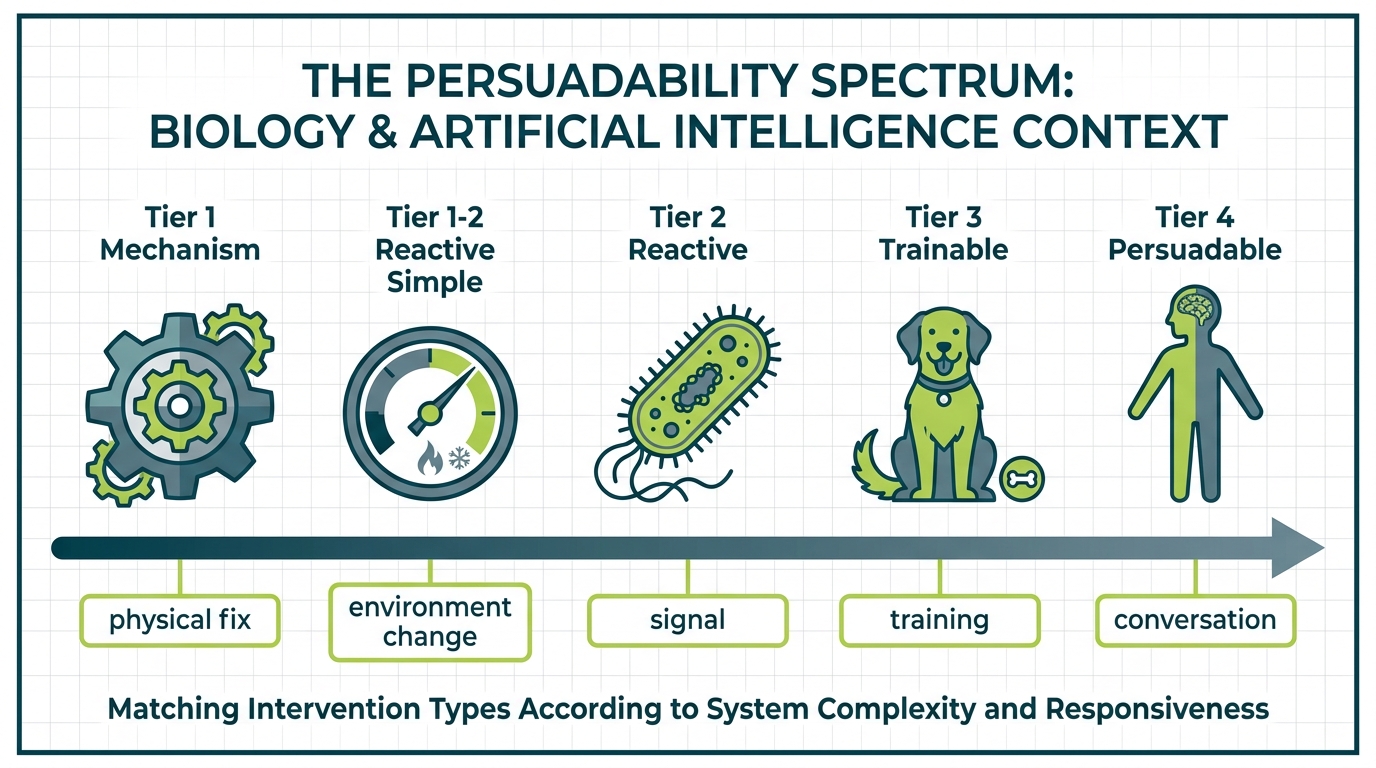
Figure 2:Five positions on the persuadability spectrum. The farther right a system sits, the less you need to specify — and the more you need to communicate.
2The Four Rough Tiers
The continuum is continuous. But four rough tiers are useful for thinking:
Picture the same problem handed to four different kinds of systems: a factory line keeps jamming at the same point, and something has to fix it.
Tier 1 — Mechanisms. You install a sensor that detects the jam and trips a physical brake. You have not communicated with anything. You have rearranged matter. The system has no opinion about whether this is a good idea. If you install the sensor backwards, it jams at the wrong moment and nobody inside the machine notices, because there is no inside. To change the outcome, you physically change the structure. That is the only lever available.
Tier 2 — Reactive systems. You introduce a colony of bacteria whose chemical environment changes when the line jams. They respond by secreting a compound that lubricates the joint. You didn’t program the response — you changed the environment and they handled the rest. This is a qualitatively different kind of intervention. You are working with the system’s own logic rather than replacing it. But you can’t negotiate with bacteria. If you want a different response, you change the environment again. There is no learning, no memory, no training.
Tier 3 — Trainable systems. You assign a line worker who has been on this floor for three years. She knows which jams are noise and which are real. She has been rewarded for fast, accurate calls. Over months, those rewards have reshaped her judgment in ways neither you nor she can fully articulate. You can shape her behavior through repeated experience — but you cannot hand her a manual and expect it to work. The manual is not where her skill lives. Her skill lives in pattern recognition built from repetition. Change the rewards and you change the worker. Give her a speech and nothing happens.
Tier 4 — Persuadable systems. You bring in the floor manager and explain the problem: the line jams every Tuesday morning, probably due to humidity from the weekend shutdown, and you need a solution by Friday because the client is coming. She nods. She will figure it out. She might talk to maintenance, she might consult the equipment manual, she might call a colleague at another plant, she might realize Tuesday’s humidity isn’t the real issue at all. You gave her a goal. She will find the means. That is the whole difference.
Now do the obvious thing: give each system the wrong intervention.
Try to persuade the Tier 1 sensor. Nothing. Try to train the bacteria. Nothing. Try to reprogram the experienced worker without her input. She nods, ignores you, and keeps doing what works. Try to give the floor manager step-by-step instructions for every hour of her day. She starts executing instead of thinking. Her judgment goes offline. You have just demoted a Tier 4 system to a Tier 1 gear — and she resents you for it.
The persuadability spectrum is not just a classification. It is a warning: pick the wrong tool and you actively remove the intelligence you were trying to use.
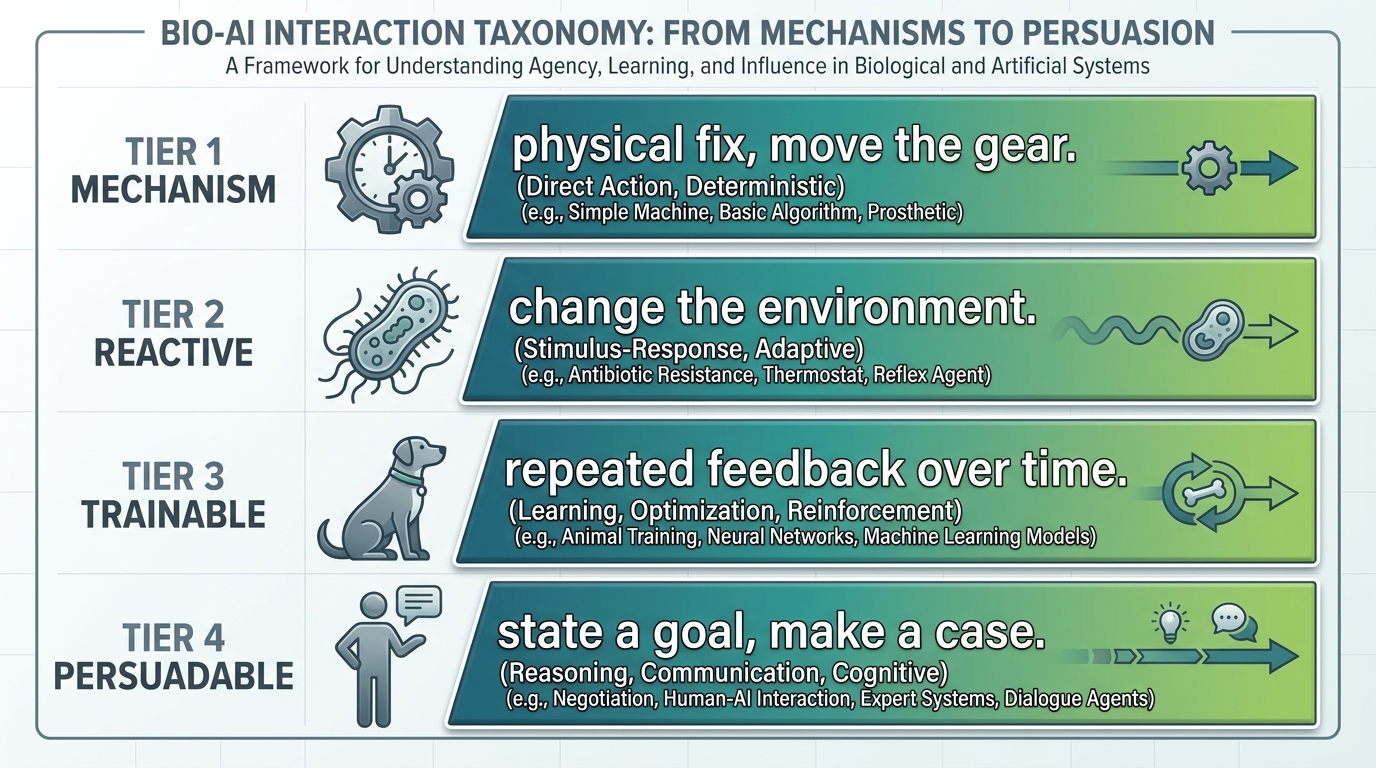
Figure 3:The four tiers are rough categories cut from a smooth continuum. Most interesting systems sit between tiers — the useful question is always “which direction does this system lean?”
3The Wrong Lever
Here is where things go wrong. And they go wrong constantly.
The most common mistake is not using the wrong tool on the right tier. It’s not knowing which tier you’re dealing with in the first place. So you bring the wrong tool entirely.
Consider the hardware fix on a persuadable system. You want your employees to follow a new safety protocol. So you write a 47-page manual specifying every action in sequence. You’ve tried to turn Tier 4 humans into Tier 1 mechanisms. What happens? They follow the manual when someone is watching. They improvise the rest of the time. The protocol fails in the exact situations where it matters most — the novel ones the manual didn’t anticipate.
Now the opposite mistake. You want a production server to stay within a memory budget. You don’t change the code. Instead you “motivate” it. This sounds ridiculous, but people do the computational equivalent: they add logs, add dashboards, add alerts — all aimed at informing a system that has no goal-pursuit capability. The server doesn’t read the dashboard. It just uses memory.
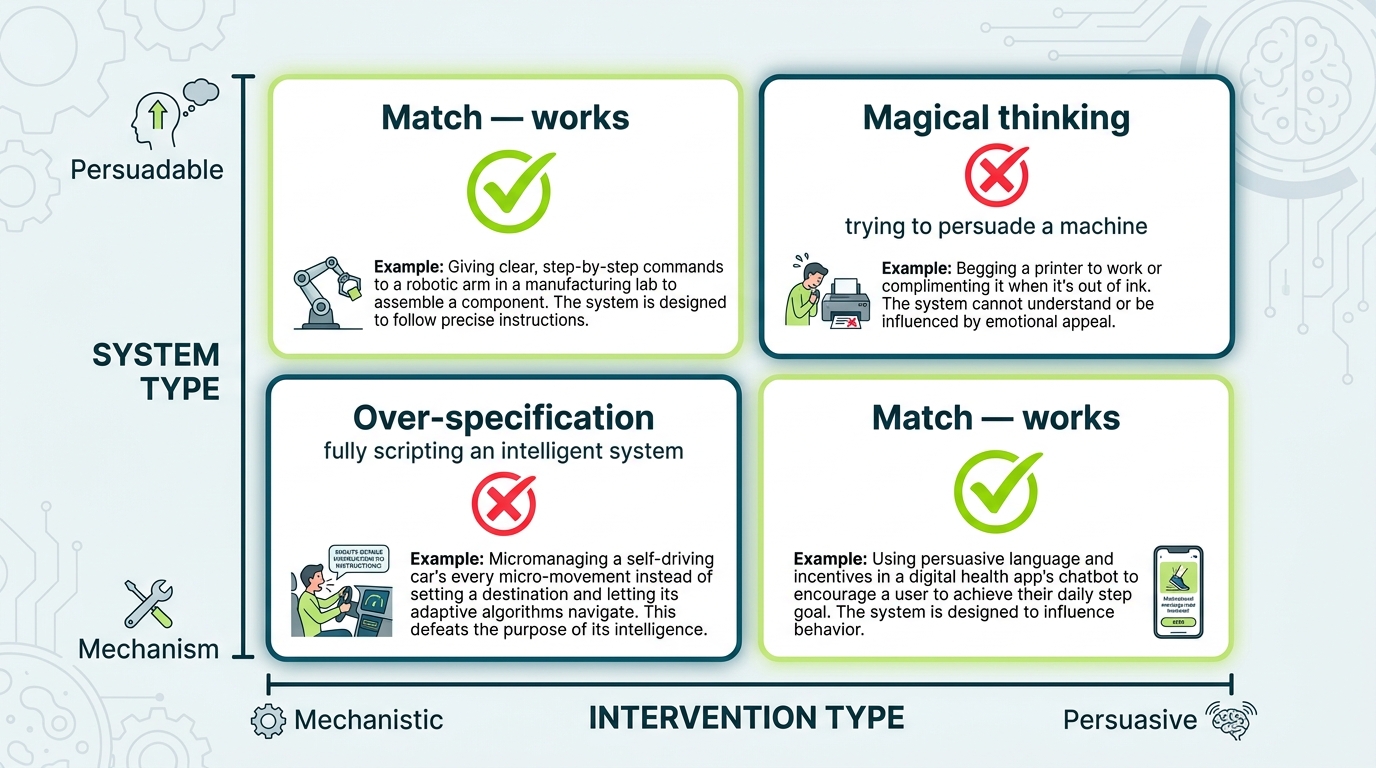
Figure 4:Two of the four quadrants work. Two don’t. Most expensive failures live in the bottom-left: trying to fully specify the behavior of a system that is capable of doing its own problem-solving.
4The Cell as a Trainable System
Now the pivot that makes this biological.
You have a skin cell. You want it to become an eye.
Option one: you edit the DNA. Specify every gene expression, every protein, every timing signal. That’s Tier 1 thinking applied to a biological cell. It’s hard, it’s fragile, and if you get any part of the sequence wrong, the whole thing collapses.
Option two: you send a bioelectric signal.
Michael Levin’s lab at Tufts did exactly this. Using tiny electrodes, they altered the bioelectric state of tissue in tadpoles. The cells read the signal, ran their own developmental program, and built a functional eye — not where eyes normally form, but wherever the signal was delivered. The genome didn’t change. No gene editing. One signal. The cell did the rest.
That’s Tier 2 being treated like Tier 2. The cell is not a mechanism. It is a reactive system with a built-in developmental program. You don’t specify the eye. You request the eye. The cell knows how to build it.
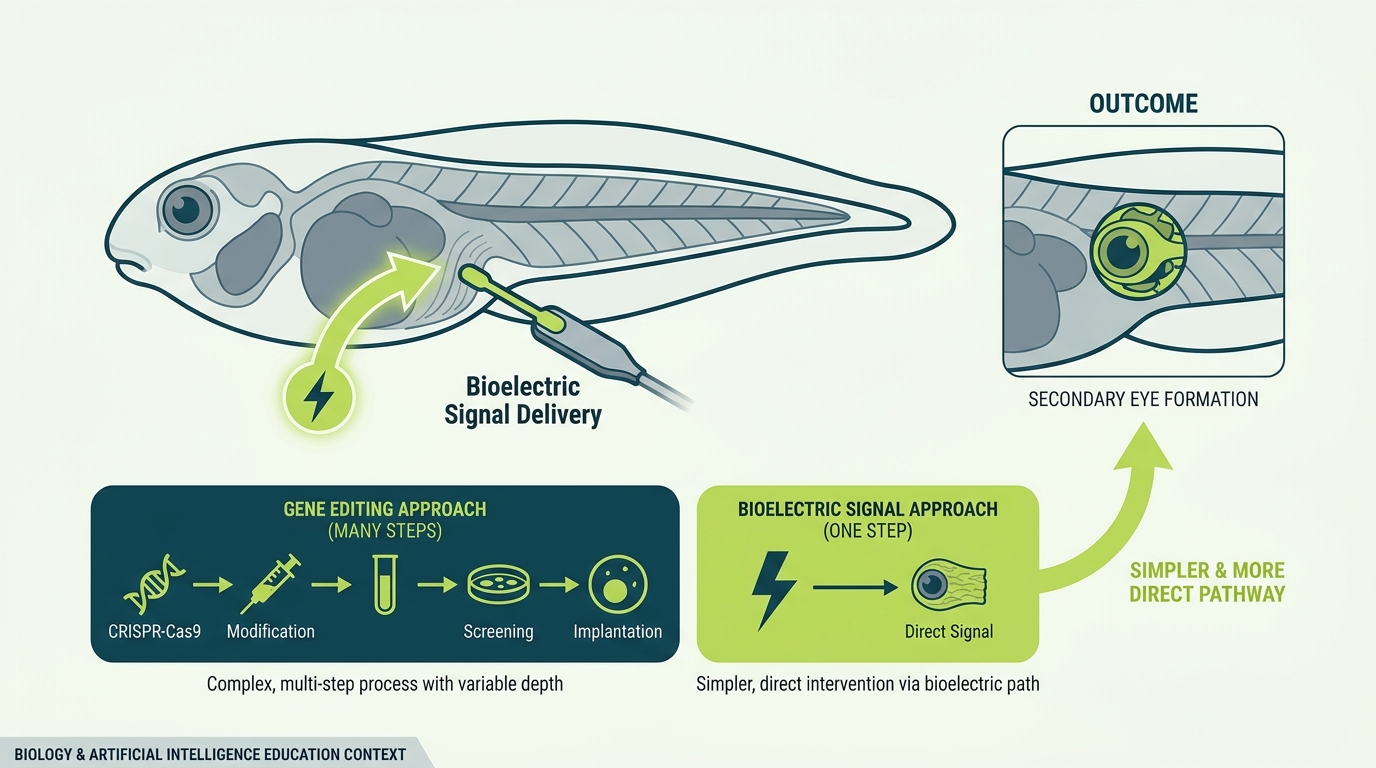
Figure 5:A bioelectric signal to the right tissue produces a whole eye — without touching the genome. The intervention matched the tier of the system. The cell handled the specification internally.
The same logic applies to limb regeneration. Salamanders regrow lost limbs. Frogs mostly don’t. The difference is not in the DNA — frogs have the same genes salamanders use for regeneration. The difference is in the bioelectric state. Levin’s group applied bioelectric signals to frog stumps and got partial limb regrowth. The instruction was a signal, not a blueprint.
This is not a trick. It is what the system is designed for.
5Intervention Depth vs. Payoff per Unit Effort
There’s a curve here worth seeing clearly.
As you move left on the persuadability spectrum — toward mechanisms — your intervention depth has to increase. You have to specify more. You have to touch more of the system. But your payoff per unit of effort drops. Each additional gear you adjust gets harder and yields less.
As you move right — toward persuadable systems — your intervention can be shallower. One well-chosen signal. One clearly stated goal. But the payoff is enormous. The system does the problem-solving. A good argument reaches a person and changes dozens of downstream behaviors automatically.
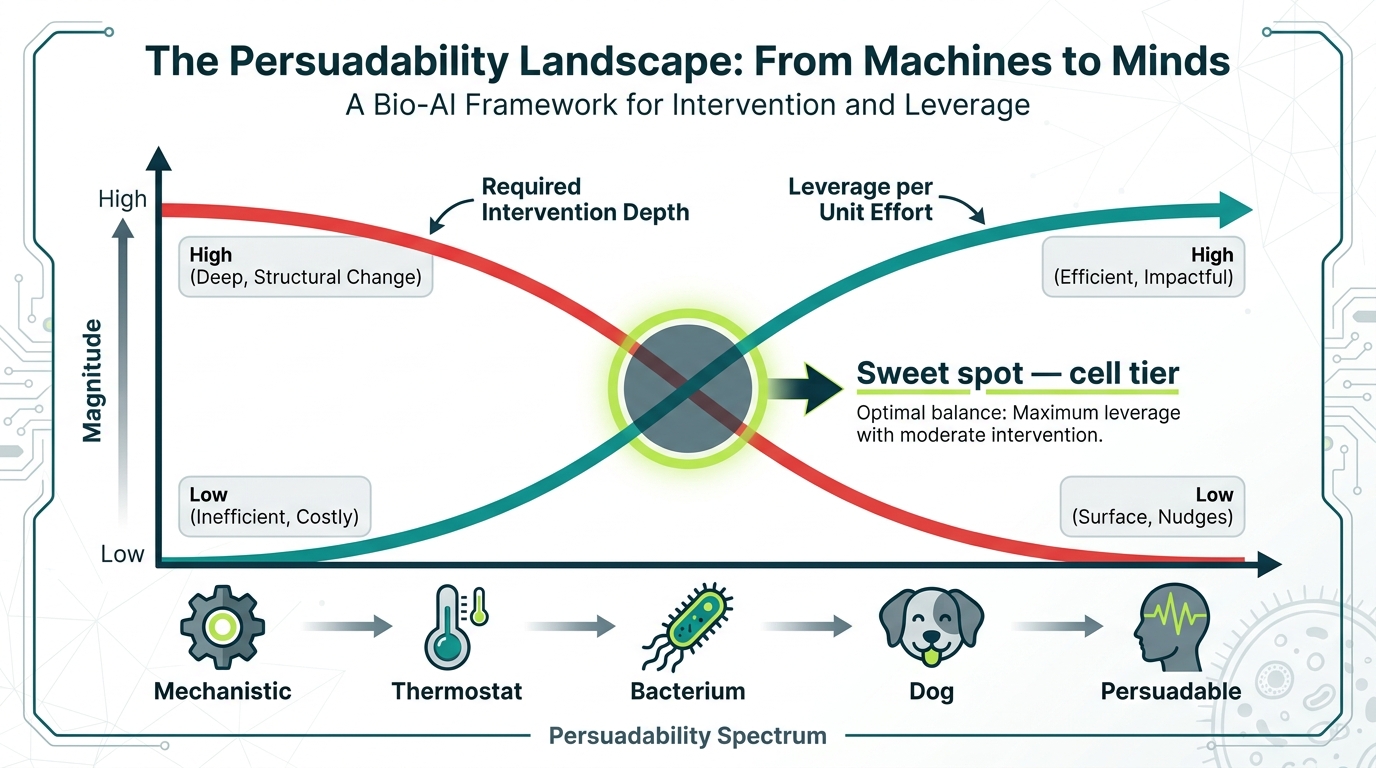
Figure 6:Intervention depth and payoff run in opposite directions. The cell tier is near the crossing point — one signal can trigger enormous downstream computation. This is why bioelectric intervention is so interesting economically.
This curve has a practical name in control theory: minimum effective intervention. You want to intervene at the minimum depth that achieves the goal. Going deeper than necessary wastes effort and — critically — removes the benefits of the system’s own intelligence.
If the system is smart enough to figure out the path, let it. Your job is to give it a destination, not a turn-by-turn script.
6Regenerative Medicine as a Control Problem
Oncology and regenerative medicine are, in this frame, control engineering problems.
The current model says: find the bad molecule, block it, or fix the gene. That’s Tier 1 thinking. It works for some problems. It fails for complex morphological ones — why did the limb form wrong, why is the tissue the wrong shape — because those problems involve the tissue’s internal goal state, not a single molecular defect.
The alternative: treat the tissue as a Tier 2 or Tier 3 system with a target shape it is trying to hit. Identify where the bioelectric signal is wrong. Fix the signal. The tissue handles the rest.
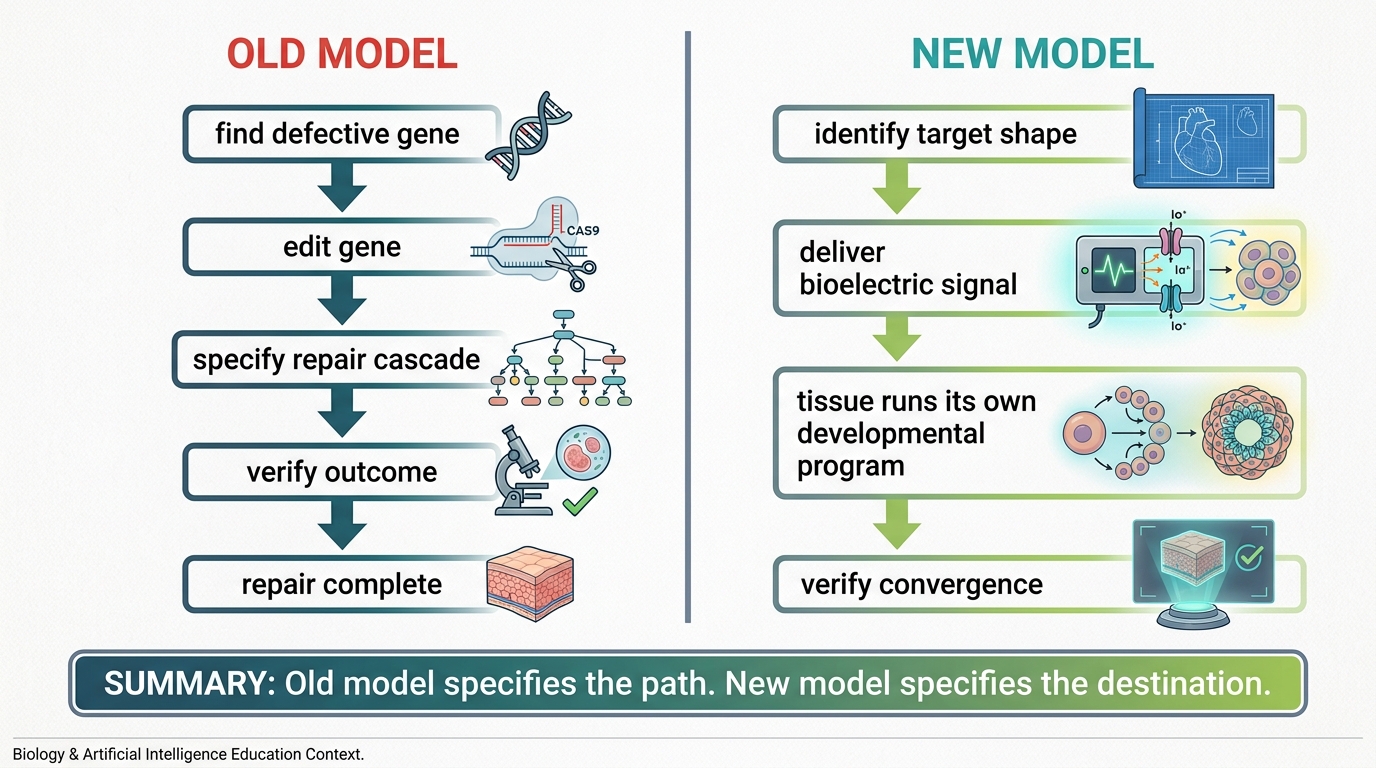
Figure 7:Two philosophies of regenerative medicine. The new model treats tissue as a goal-pursuing system. The intervention sets a target; the biology does the engineering.
This is not speculative. In 2022, Levin’s group induced frog tadpoles with damaged tails to regrow — by treating them briefly with a bioreactor that restored the bioelectric environment. The tadpoles’ own cells did the construction. The bioreactor didn’t specify a single protein. It gave the tissue a signal that said, roughly, you are supposed to have a tail here. The tissue agreed and built one.
Why this matters beyond medicine
The same logic applies anywhere you have a complex adaptive system. Cities. Ecosystems. Organizations. An urban planner who tries to specify every street, every building, every traffic pattern is doing Tier 1 control on a system that is closer to Tier 4. Overwhelmingly, cities that work are ones where people are given clear goals (zoning intent, economic incentives, safety standards) and then trusted to solve the details locally.
This is not a political argument. It is a control-theoretic one. The system has more information about its local state than any central planner does. Use that.
7The Same Spectrum for AI Systems
Now apply all of this to building software.
You have an AI agent that is giving bad answers. You need to fix it. Four options, arranged by intervention depth:
The AI Intervention Ladder
Rung | What you do | What changes | When to use it |
|---|---|---|---|
Hardware (Tier 1) | Patch the code, change architecture, swap models | The mechanism itself | Fundamental capability gap — the model can’t do the task at all |
Weights (Tier 1.5) | Retrain or fine-tune on new data | The model’s internal representations | Consistent domain failure across many prompts; behavior pattern, not a knowledge gap |
Prompt (Tier 2–3) | Rewrite the system prompt, add examples, change instructions | The model’s input context | Most instruction-following and tone problems; role and format issues |
Tools and memory (Tier 3) | Give the agent new tools, a retrieval system, a scratchpad | What the agent can access | Knowledge gaps, long-horizon failures, tasks requiring external state |
Goal (Tier 4) | Define a clear objective; let the agent plan | What the agent is trying to do | Under-specified tasks where the agent is failing to make useful decisions |
Engineers, especially those with a systems background, default to Tier 1. They retrain. They fine-tune. Fine-tuning a model costs anywhere from a few hundred to several million dollars depending on scale, takes days or weeks, and breaks the moment requirements shift. And often — very often — the real problem was a bad system prompt that could have been fixed in twenty minutes.
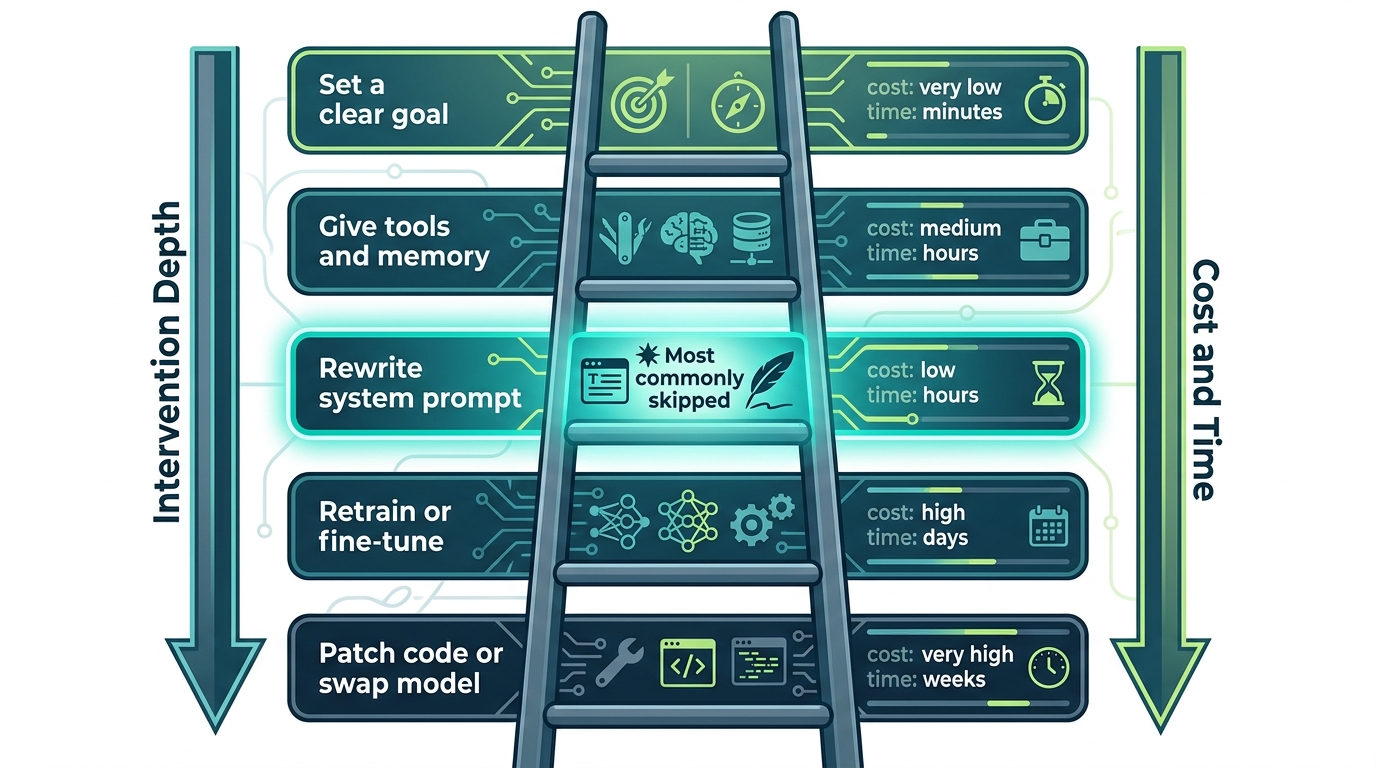
Figure 8:The AI intervention ladder. Most problems live on the upper rungs. Most engineers start on the lower rungs. The mismatch is expensive.
Here is a concrete failure mode. A company builds a customer-service agent. It keeps apologizing too much and escalating too quickly. The team spends three weeks curating training data and runs a fine-tune. The agent is a little better. They run another fine-tune. Two months in, the agent is marginally improved and the team is exhausted.
The real problem: the system prompt said “always be helpful and escalate if you’re unsure.” The word “unsure” was doing enormous work. The agent was unsure about most things. One-sentence prompt change: “escalate only if the customer explicitly requests a human or the issue involves a refund above $200.” Problem solved. No fine-tuning needed.
That is over-specification — Tier 1 intervention on a Tier 4 system. You are treating the agent’s policy as a gear to be moved, when the agent is capable of following a goal and making sensible decisions.
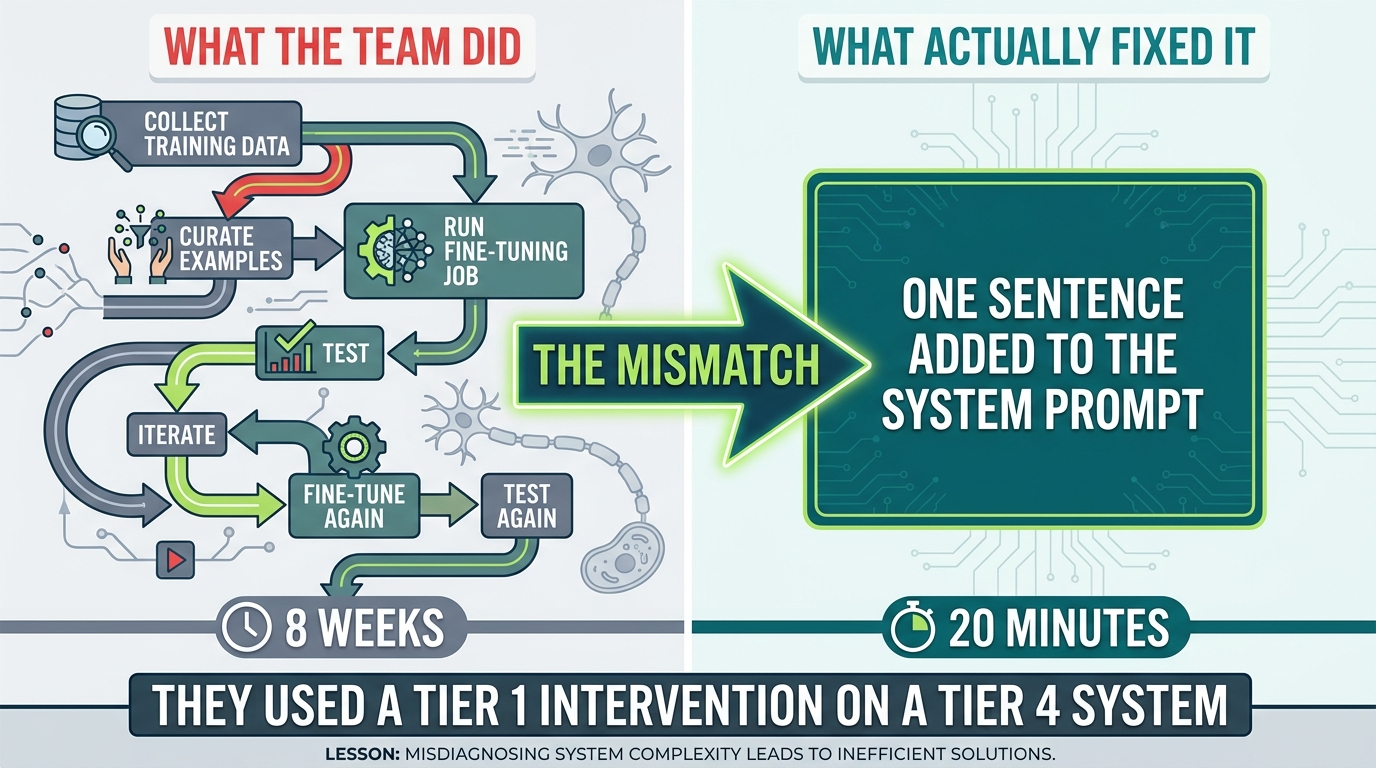
Figure 9:This pattern repeats across teams and companies. The fix was a higher-rung intervention. The team went to the lowest rung by default.
The opposite mistake also exists. Teams running agents on genuinely hard problems — multi-step research, code generation with external dependencies — sometimes rely entirely on prompting. They write longer and longer system prompts. At some point, the agent needs a tool. It needs a memory store. It needs to be able to search, to write to a file, to call an API. No amount of prompting compensates for a missing capability. You have moved past what language can fix.
When the system’s current tier is too low for the task, the only real fix is to raise it. Give it tools. Give it memory. Give it a scratchpad. Then ask again.
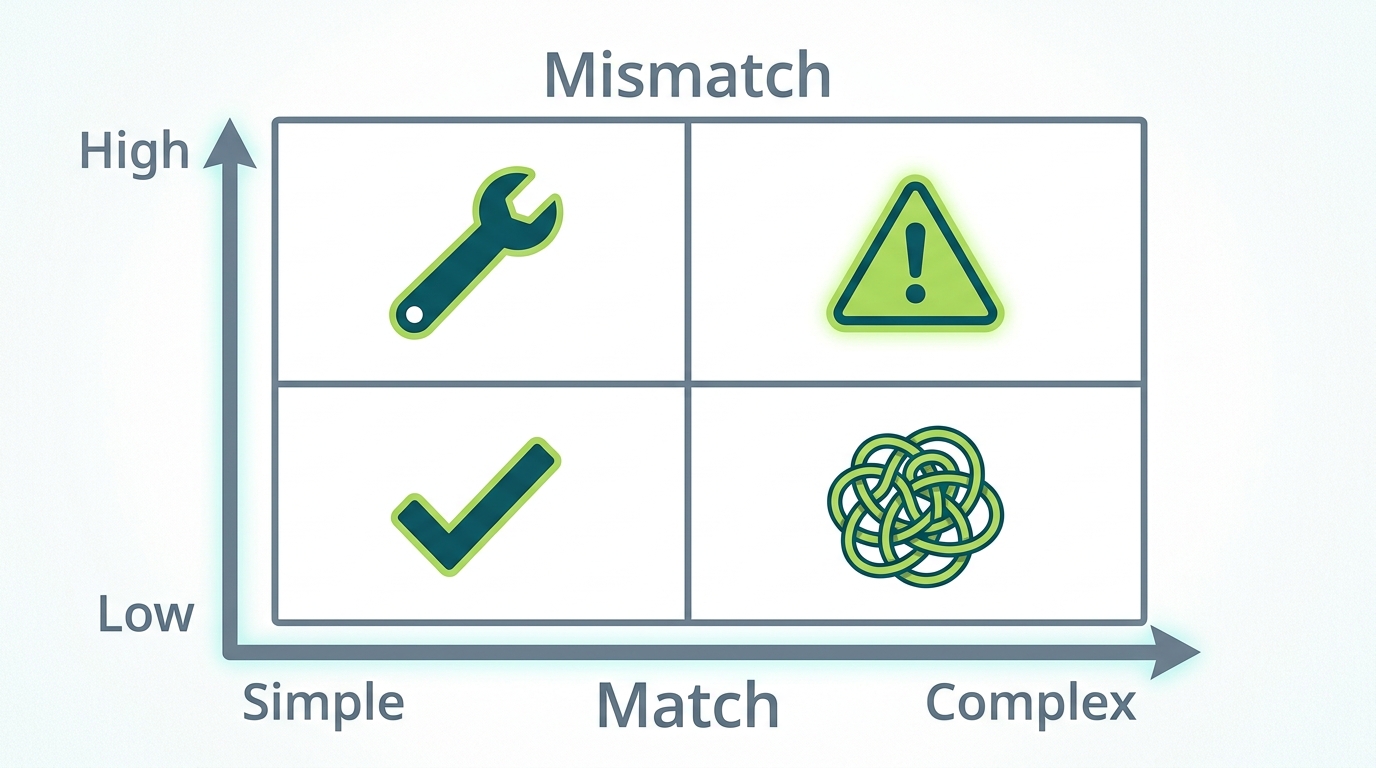
Figure 10:The same mismatch matrix applied to AI systems. Most engineering waste lives in the top-left quadrant: running Tier 1 interventions on Tier 3–4 systems.
8Diagnosing the Tier
You need a way to figure out which tier a system is actually on. Here’s a practical decision procedure.
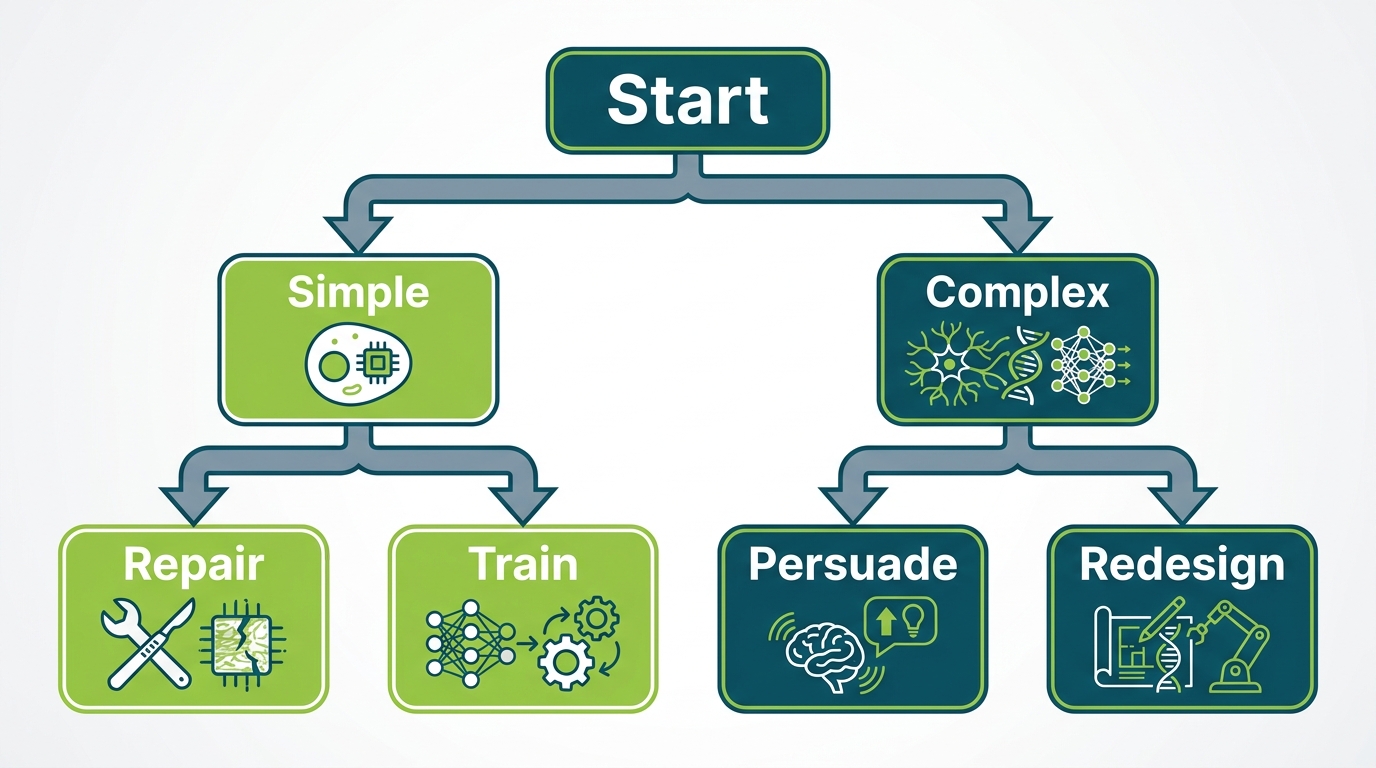
Figure 11:A diagnostic decision tree for placing a system on the persuadability spectrum. Each branch has a real test. Don’t assume — probe.
Ask four questions, in this order:
1. Can it produce different outputs for the same input? If no — reliably identical output every time — you have a mechanism. Tier 1. Fix the structure.
If yes, keep going.
2. Does it maintain state across interactions? If no — every session starts fresh, nothing carries over — you’re probably at Tier 2. Signals work. Training won’t stick.
If yes, keep going.
3. Can it generalize from examples it hasn’t seen? Give it a new situation. Does it reason by analogy, or does it fail? True generalization — not just pattern-matching within a narrow distribution — puts you at Tier 3 or above.
4. Can it represent goals and reason about them? Not just follow instructions. Can it explain why it’s doing something? Can it notice when an instruction conflicts with a goal and flag the conflict? Tier 4.
Most current large language model agents sit somewhere between Tier 3 and Tier 4 depending on the task. They generalize impressively. Their goal-representation is real but patchy. They can reason about objectives in some domains and fail completely in others.
That is not a criticism. It is a calibration. Once you know where the system sits, you pick the right rung.
The over-attribution problem
Humans are extraordinarily good at seeing intelligence where there is none. We give names to Roombas. We apologize to chess computers. We attribute strategic thinking to markets.
This matters for the persuadability spectrum because it tempts you to apply Tier 4 interventions to Tier 2 systems. “I’ll just tell the model what I want.” If the model doesn’t have the architectural capacity to represent goals and update them based on argument, the telling doesn’t land. You’re not being ignored. The system literally cannot process the input the way you intended.
Check your tier assignment against the four questions above, not against how sophisticated the system seems in casual interaction.
9The Right Lever Is a Skill
Picking the right intervention level is not obvious. It requires knowing what the system actually is — not what you wish it were, not what it looks like in a demo.
A clock that runs fast is not confused. It does not need a conversation. You adjust the escapement.
A dog that bites is not evil. It is not malfunctioning mechanically. You reshape the association between trigger and response — through time, repetition, and consequence.
A person who keeps making the same mistake is not broken and not untrainable. They have a model of the world that produces that behavior. You need to change the model. That means argument, evidence, and sometimes trust.
A cell that builds the wrong shape is signaling a wrong goal state — and the right intervention is a bioelectric correction, not a gene edit, not a drug.
An AI agent that gives bad answers might need a better prompt, a new tool, or a clearer goal — not a fine-tune, not a model swap, not three months of data curation.
The skill is the diagnosis. Develop it first. Everything else follows.
Here is the version of this that should bother you.
The wrong intervention doesn’t just fail. It demotes the system. Give a capable person step-by-step instructions for something they already know how to do, and you haven’t managed them — you’ve converted a Tier 4 mind into a Tier 1 gear. The person stops problem-solving and starts executing. Their judgment goes offline. Their creativity goes offline. And they resent you for it, which is the system telling you that you have chosen the wrong tool.
Every micromanager in history has made this mistake. Every over-specified AI prompt makes the same mistake. The intervention that bypasses a system’s own problem-solving doesn’t just miss — it actively removes the intelligence you were trying to use.
The right question before any intervention: am I about to talk to this system, or am I about to replace it?
Here is why this matters for everything that follows. The experiments in this book — the ones that ask whether AI systems habituate, whether a model changes from experience, whether a synthetic organism can generate its own goals — are all, underneath, asking where something sits on this spectrum. A system that only executes (Tier 1) cannot habituate. A system that only reacts (Tier 2) cannot learn. A system that trains (Tier 3) changes — but only within the goals it was given. The question the later chapters are trying to answer is whether any of our built systems have crossed into Tier 4: not just executing goals we specified, but representing goals flexibly enough that experience reshapes them. The spectrum is not a taxonomy. It is a diagnostic. And the chapters ahead are running the test.
10🤔 Think About It
Here’s a genuine puzzle with no clean answer.
A large language model is deployed as a homework-help tutor. Students are allowed to ask it anything, and it answers in detail. After a semester, test scores go up — but when students are tested without the AI available, their performance drops below the baseline from before the AI was introduced.
One interpretation: the AI has made students worse at thinking independently. You need a Tier 1 fix — restrict access, change the tool.
Another interpretation: the students have formed a dependency because the AI was always available, but the underlying skill is still there. You need a Tier 4 fix — have a conversation with students about when and how to use the tool.
A third interpretation: the AI is too good at tier-matching itself to whatever the student asks — it does the thinking for them because they are being persuasive at Tier 4, and the AI cooperates. The fix is changing the AI’s goal: not “answer the question” but “help the student find the answer.”
Which tier is the real problem at? Where does the intervention land — the student, the tool, or the goal given to the tool? And could the same behavior look like a bug in one frame and a feature in another?
Sit with it. There is something important in the discomfort of not having a clean answer.
11💬 Discussion
Choose a system you interact with daily — a piece of software, a team process, a physical device, or even a biological system like your own body. Diagnose which tier it sits on using the four-question procedure from this chapter. Then describe one intervention that would be well-matched to its tier and one that would be mismatched. Explain what would happen with each.
Discussion Guidelines
Support your main post with at least one credible source, cited.
Reply to at least two classmates with substantial feedback — extend, challenge, or add evidence. “I agree” is not a reply.
12🔬 Hands-On Lab: The Tier Detective
Pick any AI tool you have access to — a chatbot, a recommendation system, a writing assistant, a search engine, anything.
Run the four diagnostic questions on it. Document what you observe:
What happens when you give it the exact same input twice?
What carries over between conversations (if anything)?
Give it a scenario it almost certainly has never seen. Does it generalize sensibly?
Ask it to explain why it’s doing something. What do you get?
Based on your findings, pick one real problem with the tool and propose an intervention at the correct tier. Not a hypothetical fix — an actual change you could make right now (rephrasing a prompt, adding a tool, changing a setting).
Group Build:
Use AI to identify a real problem in your own context.
Use AI to develop a solution to it.
Be ready to tell the class: what problem, how AI helped, what the solution looks like, and what the AI got right or missed.
13🐍 Optional Advanced Lab: Mapping the Persuadability Spectrum

You will build a simple scoring tool that takes a system description and outputs a tier estimate. You will probe a real AI API with identical prompts across sessions, with state manipulation, and with novel generalization tests — and plot where it falls on the spectrum.
14🎯 In-Class Assignment: Tier Diagnosis and Intervention Design (10 pts)
Details and instructions will be provided in class.
Points: 10
15📖 Glossary
Chapter 2 Key Terms
Term | Definition |
|---|---|
Persuadability spectrum | A continuum from fully mechanistic systems (require physical intervention) to fully persuadable systems (respond to goals and arguments). Where a system sits determines which intervention type works. |
Mechanistic system | A system whose output is fully determined by its structure. Intervention requires physically altering that structure. A gear is the clearest example. |
Reactive system | A system with a sensorimotor loop — it senses input, computes internally, and responds. You can influence it by changing its environment. You cannot train it. |
Trainable system | A system with associative memory that links stimuli to outcomes over time. Repeated paired signals gradually reshape its responses. Most vertebrates qualify. |
Persuadable system | A system with a model of goals and the ability to update that model based on argument or evidence. Effective intervention presents objectives, not scripts. |
TAME framework | Technological Approach to Mind Everywhere. Michael Levin’s framework for studying goal-directed behavior at all scales, from cells to organisms to collectives, without requiring consciousness or neurons. |
Intervention depth | How far into a system’s structure an intervention must reach. High depth means changing physical structure or weights. Low depth means sending a signal or stating a goal. |
Intervention payoff | The amount of behavioral change produced per unit of intervention effort. Persuadable systems have a high payoff: one clear goal changes many downstream behaviors automatically. |
Bioelectric signaling | Communication between cells via ion flows and membrane voltage. Used to coordinate tissue-level behavior. Altering the bioelectric signal can redirect developmental programs without genome editing. |
Over-specification | Applying a Tier 1 (mechanistic) intervention to a higher-tier system. The system is capable of solving the problem itself; the over-specifier does the work instead, losing the system’s intelligence as a resource. |
Tier 1 (Mechanism) | Systems with no internal goal. Output is a direct function of structure. Fix: alter the structure. |
Tier 2 (Reactive) | Systems with sensorimotor loops but no persistent memory. Fix: change the environment or signal. |
Tier 3 (Trainable) | Systems with associative memory and some generalization. Fix: repeated feedback over time. |
Tier 4 (Persuadable) | Systems with goal models and the ability to reason about them. Fix: communicate objectives clearly. |
Cognitive light cone | The range of space and time a system can represent in its goals. A bacterium has a tiny cone — here, now. A human has an enormous one — distant places, future decades. Introduced fully in Chapter 3. |
Fine-tuning | Adjusting a pre-trained model’s weights using a new dataset. A Tier 1.5 intervention for AI systems. Expensive, slow, and fragile — often used when a prompt-level fix would suffice. |
System prompt | The initial instructions given to an AI agent before user interaction begins. A Tier 2–3 intervention. The most underused and underestimated lever in AI engineering. |
Sensorimotor loop | The cycle of sense → compute → act that is the minimum unit of goal-directed behavior. Even bacteria run one. Named after the motor and sensory systems in animals, but the concept applies to any feedback process. |
16🔑 The Takeaway
Intelligence is not a category. It’s a dial.
The dial position tells you what kind of intervention works — not what you prefer.
Going too deep wastes effort and removes the system’s intelligence as a resource.
Going too shallow on a mechanism fails completely — signals don’t reach it.
Cells can be sent a signal and trusted to build an eye. The genome doesn’t have to specify every step.
Most AI engineering waste lives in one quadrant: Tier 1 interventions on Tier 3–4 systems.
A bad system prompt causes more failures than bad model weights. Fix the prompt first.
The diagnostic skill — placing a system on the spectrum before choosing a fix — is what separates thoughtful engineers from expensive ones.