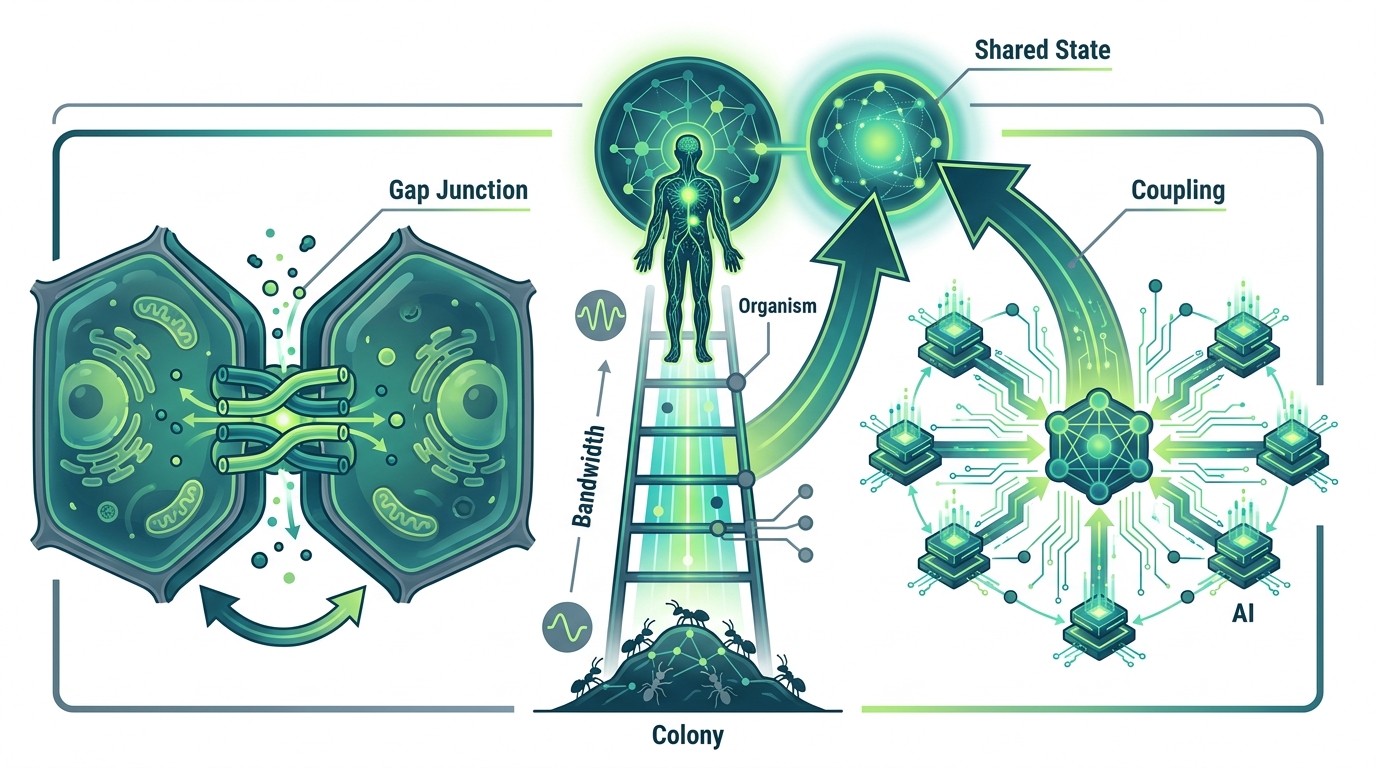
Figure 1:The glue that holds a self together is not a metaphor. It is a physical channel — and the amount of glue you have determines whether you are one thing or many.
Imagine you and a friend are connected by a wire. Not a phone — a wire. A direct connection between your nervous systems. Whatever electrical signal fires in you travels instantly into them. You’d share every impulse the moment it arose. You couldn’t tell, after a few seconds, which thoughts were originally yours. You couldn’t tag them. The signals would mix.
Would you be two people or one?
That is not a thought experiment for cells. That is Tuesday.
Gap junctions are that wire. Protein tunnels drilled directly between adjacent cells, connecting their cytoplasms. Ions flow through them. Small molecules flow through them. Electrical signals — changes in membrane voltage — flow through them at nearly the speed of electricity. And once a signal has passed through, neither cell can tell where it came from. The state is shared. Non-attributable. Mixed.
Two cells connected by open gap junctions are not two cells sending messages to each other. They are, in a measurable functional sense, one cell with two compartments.
Now ask the boundary question again: where does one cell end and another begin? The membrane is still there. But the electrical state is shared. And it is the electrical state — not the membrane — that actually does the computational work.
This is why the answer to “where does you stop?” is not your skin. It is the boundary of shared information.
1Gap Junctions: The Physical Glue
Here is the gap in the story.
We can explain what a single cell does. We can explain what an organism does. But how do fifty million cells — each with its own electrical state, its own membrane potential, its own local history — act as one?
Something has to link them. Something has to pool their individual states into a shared state. Something has to make the collective’s behavior more than the sum of fifty million individual reflexes.
For thirty years, nobody had a clean mechanism. Cells signaled each other chemically — hormones, growth factors, diffusing molecules. That explained a lot. It didn’t explain how a tissue could make a decision in milliseconds. Chemical diffusion is too slow. The math didn’t work.
The mechanism is gap junctions.
Gap junctions are direct electrical connections between adjacent cells — protein tunnels that allow ions, small molecules, and electrical signals to flow freely from one cell’s interior to the next.
When gap junctions are open, adjacent cells don’t just communicate — they partially share an electrical state. Their individual histories blend. Their individual signals pool. What one cell experienced becomes part of what the neighboring cell knows.
That is not messaging. That is memory pooling. And it is why a tissue can behave like one mind even though it is built from millions of separate bodies.
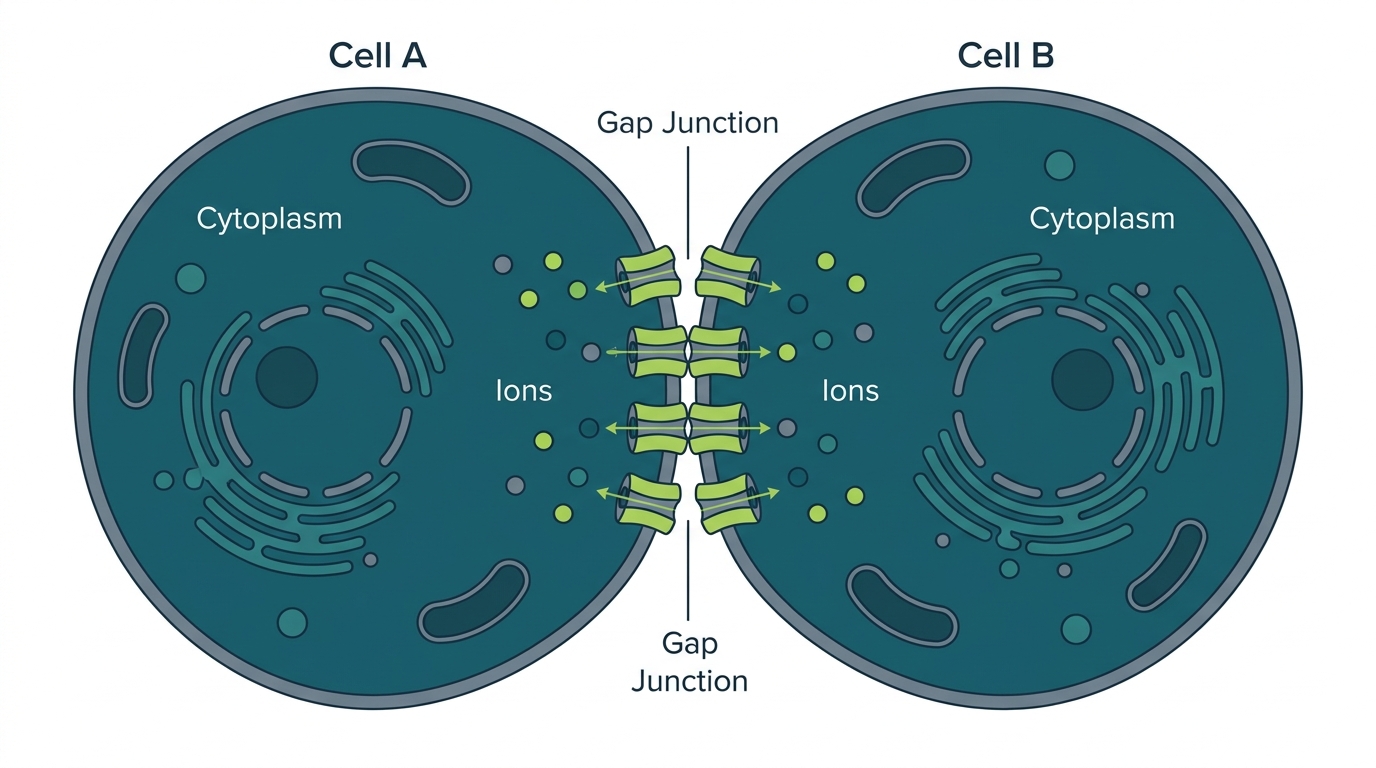
Figure 2:Gap junctions are direct bridges between cells. Ions, small molecules, and electrical signals move through them without touching the extracellular space. The two cytoplasms become, in a functional sense, one.
Most cellular communication is slow and public. A cell releases a molecule into the space between cells. The molecule diffuses. Another cell catches it — but so can any nearby cell that has the right receptor. It is more like shouting across a room than whispering to someone directly.
Gap junctions are the whisper. A direct bridge. No extracellular space. No diffusion. No eavesdropping.
What makes them strange is what this does to the identity of a signal.
What passes through a gap junction is not a message. It is state. The two cells are sharing their internal condition directly, the way two water tanks connected at the bottom share their level. You cannot tell, from the water in one tank, whether a given molecule came from the left tank or the right one. The tanks are one system.
That is the key feature: non-attributable state. The signal that passes through a gap junction cannot be tagged with its source once it has moved. If cell A sends a voltage pulse to cell B, after transmission neither cell can tell who originated it.
Ions — sodium, potassium, calcium — the currency of bioelectric signaling.
Small molecules — second messengers like cyclic AMP, which relay signals inside cells.
Electrical signals — voltage changes propagate instantly, synchronizing coupled cells.
What does not pass — large proteins, organelles, DNA. Selective by size. A pipe, not a dissolving wall.
A cluster of cells with open gap junctions behaves electrically as one cell. A voltage change in one cell propagates across all of them in milliseconds. The ripple of electrical activity across beating heart muscle is gap junctions at work.
The cells are not cooperating in the sense of agreeing. They are coupled in the sense of being continuous. Cooperation requires communication. Coupling requires only an open channel.
2When Two Memories Become One
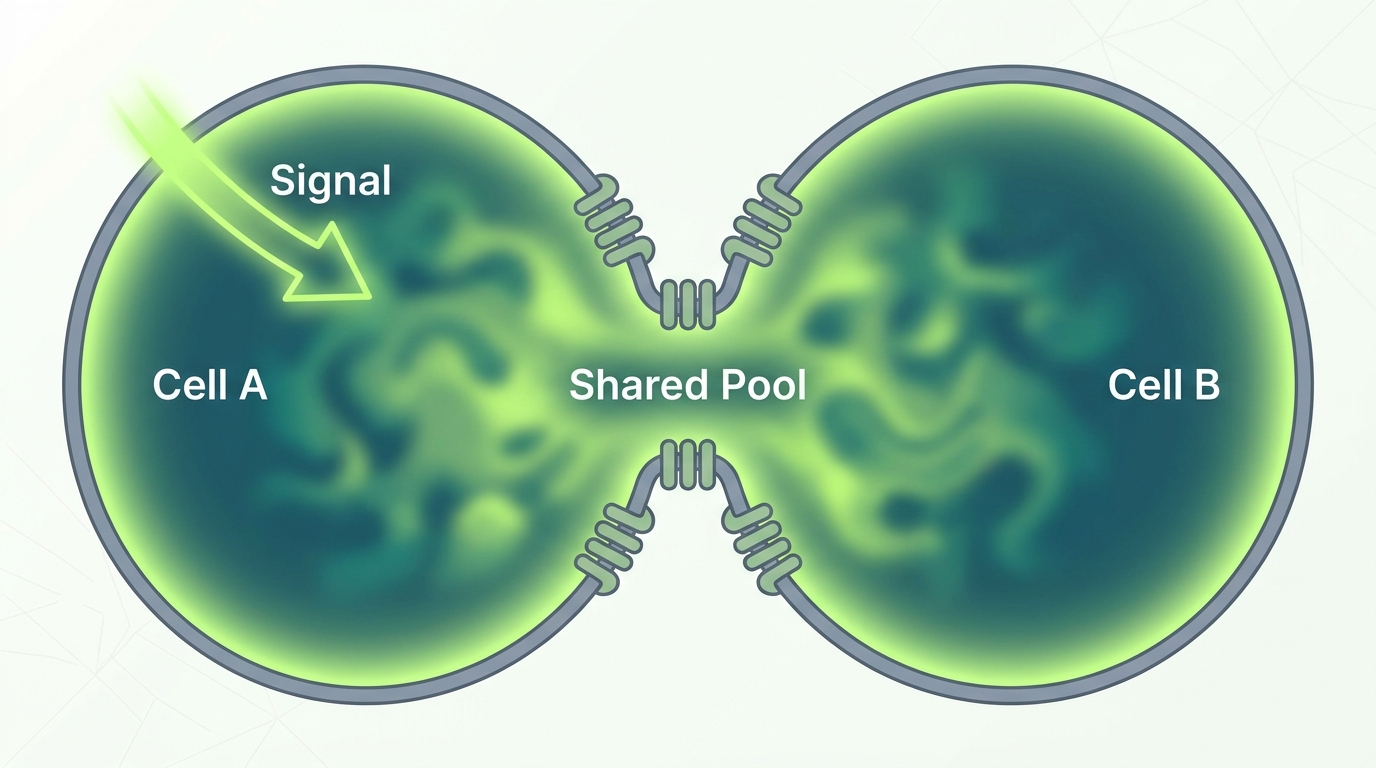
Figure 3:Once a signal has passed through a gap junction, neither cell can tell whose signal it was. The pool is shared. The memory is held by neither cell alone.
Here is Michael Levin’s argument about why gap junctions matter for individuality — and it is stranger than it first sounds.
Think about what memory is. A memory is a stored record of past experience that can shape future behavior. It does not have to live in a brain. A cell that has been exposed to a chemical can remain sensitized to it. That sensitization is a memory.
Now connect two cells with an open gap junction.
Here is what this looks like up close.
A cell in the edge of a developing embryo has spent the last six hours being compressed by its neighbors. That mechanical experience has left a trace — a slight shift in ion concentrations, a modified protein, a changed membrane potential. That trace is a memory. Not a conscious memory. A physical record of what happened.
Now a gap junction opens between that cell and its neighbor. The neighbor has been in a quieter region. It has its own history, its own pattern.
Ions flow. The modified proteins diffuse. The electrical state equalizes.
After a few minutes, both cells hold the same pattern. The compressed cell’s history is now partially in the quiet cell. The quiet cell’s calm is now partially in the compressed one.
Whose experience is it?
Neither can say. There is no provenance tag on an ion. The experience has been averaged, blended, pooled into something that belongs to neither cell individually and to both cells simultaneously.
This is what Levin means by the binding problem having a physical answer. Two cells, one shared history, one response pattern. Not two agents agreeing. One agent with two physical locations.
Cell A is sensitized to temperature. Cell B is not. The sensitization is stored in a pattern of ion concentrations and molecular modifications inside cell A. Some of those ions pass through the gap junction into cell B. Cell B begins to hold the same pattern — even though cell B never experienced the original temperature.
Whose memory is it now?
Neither can claim it. The experience was cell A’s. The storage is now shared. If you look at either cell individually, you see the same record. There is no provenance tag.
Levin argues this is the mechanism of binding — the thing that solves the “binding problem” for simple organisms. What makes two cells act as one is not coordination or communication. It is that they can no longer distinguish their own internal history from each other’s.
They have become one memory system. And a memory system is, functionally, a self.
3Cut the Glue
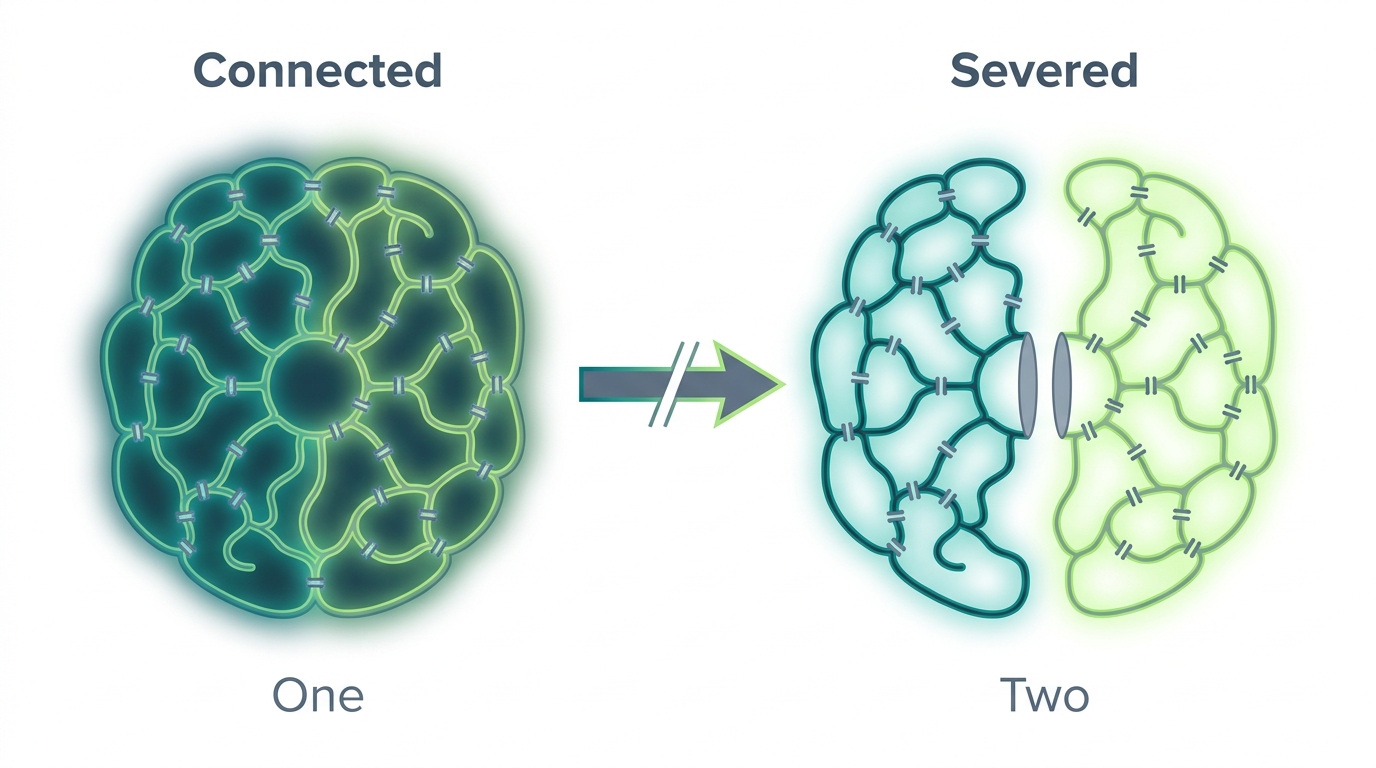
Figure 4:Before and after severing. The same cells, the same genes — two different individuals.
If all of this is right — if individuality is manufactured by coupling — then you should be able to make or break individuality by making or breaking the coupling.
This prediction is testable. And it has been tested.
Planarian flatworms are the classic example. They regenerate. Cut one in half and you get two worms. This is famous.
Levin’s lab blocked the gap junctions in a regenerating planarian.
One body. The cells were all still there. Nothing had been cut. But the electrical state could no longer flow from one region to another. The shared memory pool had been severed into two private pools.
The worm grew two heads.
Not because two heads were in the plan. Because with the communication channel gone, two separate regions each ran their own repair program — each one doing the right thing for a worm that was missing a head, without knowing the other region was doing the same thing on the other end.
One body. Two wills. Two intentions. Two regenerating programs running in parallel in a single animal.
Close the gap junctions and one individual becomes two. That is not a metaphor for what communication does to identity. It is the literal experiment. The individual is the sharing. Sever the sharing and you have divided the self.
Less famous: you can manipulate what regenerates by changing the bioelectric coupling between cells before you cut. Levin’s lab has shown that altering gap junction function in an intact worm changes the body plan the resulting pieces will regenerate toward. Same genome. Different coupling. Different outcome.
The deeper result is what happens when you increase coupling abnormally. Tumor cells often show dysregulated gap junction expression. Some cancers sever gap junctions, breaking the cell out of the tissue’s shared state and letting it run its own agenda — exactly the de-integration failure mode we described in Chapter 4. But some cancers show the opposite: abnormal coupling that propagates corrupted signals across large cell populations, spreading the damage.
The takeaway is not “gap junctions are good.” It is that the right amount of coupling manufactures the right boundary. Too little and the individual fragments. Too much and local corruption goes global.
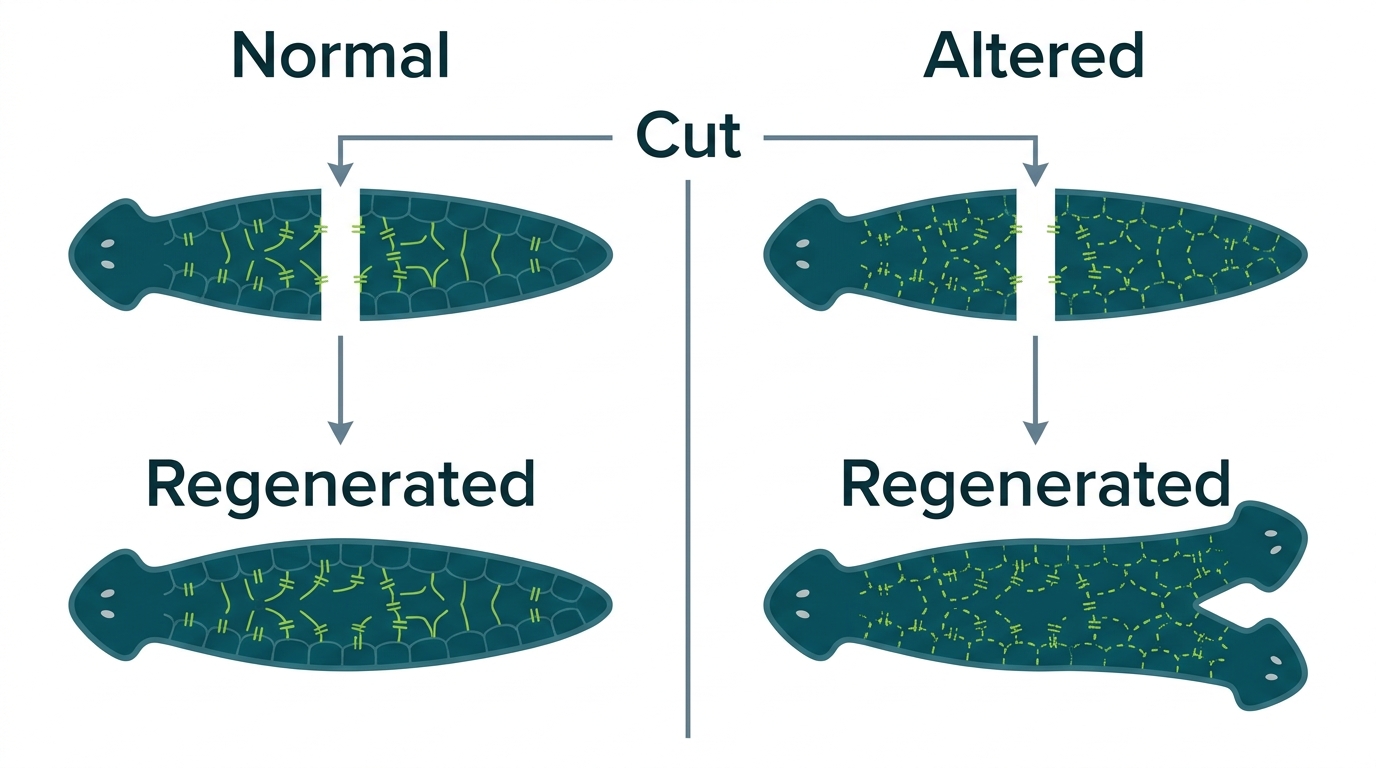
Figure 5:Same genome, same cut, different coupling — different outcome. Individuality is written in the channel, not just the DNA.
4The Bandwidth Ladder
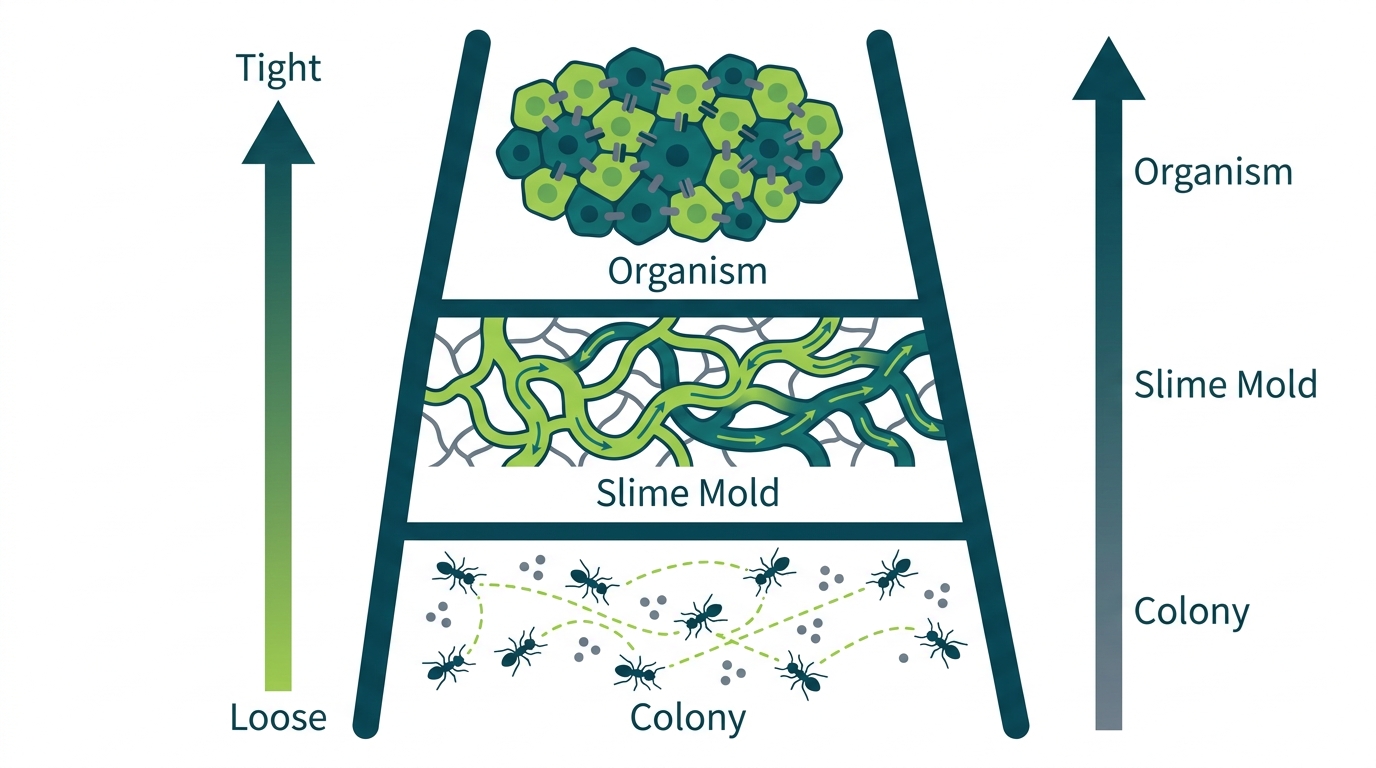
Figure 6:Individuality is not binary. It comes in degrees, corresponding to how much state is shared and how fast. The ladder has many rungs.
Individuality is not binary. It comes in degrees.
Consider three systems and where they fall.
An ant colony. Ants share pheromone trails — chemical signals that disperse in the air. Slow, lossy, anonymous. Any ant can read any trail, but no ant gets the full picture. The colony acts as a unit in some ways — foraging, defense, thermoregulation — but each ant is a full organism with its own sensors and goals. The coupling is loose.
Physarum polycephalum, the slime mold. A single giant cell with many nuclei, it forms tube networks carrying cytoplasmic flow. State passes through those tubes much faster than pheromones diffuse. Toshiyuki Nakagaki showed in 2000 that Physarum solves a maze by growing toward food and retracting from dead ends. The decision emerges from flow dynamics across the whole network. The coupling is tighter than an ant colony, and the individuality is correspondingly stronger.
A vertebrate organ, like a patch of heart muscle. Cells are directly coupled by gap junctions. A voltage change propagates at electrical speed across the whole patch. There is no delay, no loss, no possibility of one part not receiving the signal. The individuality here is tight — the patch contracts as one.
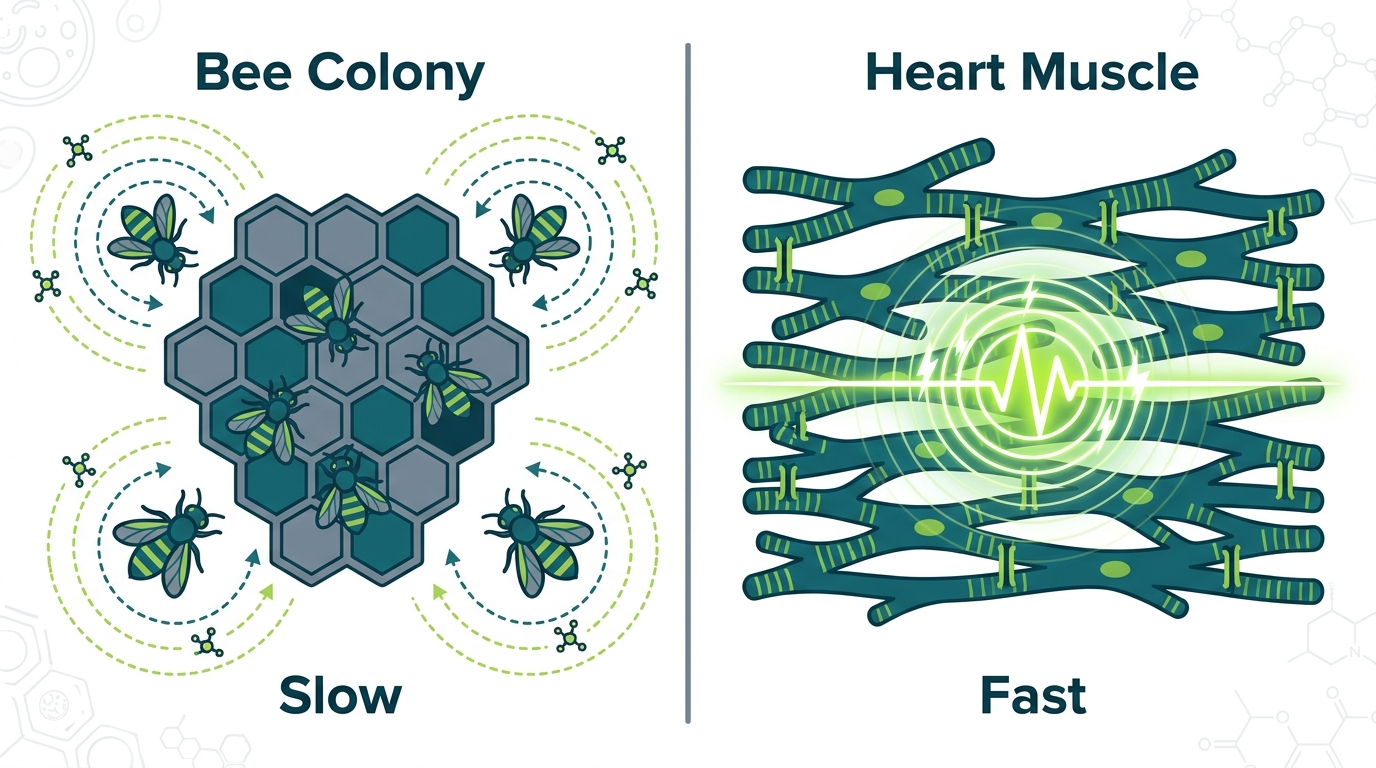
Figure 7:Two systems, two degrees of individuality. The bee colony coordinates through diffusing signals — slow, lossy, each bee still its own agent. Heart muscle couples directly through gap junctions — fast, total, the patch acting as one.
System | Coupling medium | Coupling speed | Degree of individuality |
|---|---|---|---|
Ant colony | Pheromones (air diffusion) | Minutes to hours | Loose — each ant remains a separate agent |
Slime mold | Cytoplasmic flow through tubes | Seconds to minutes | Intermediate — organism-level decisions emerge |
Heart muscle patch | Gap junctions (direct electrical) | Milliseconds | Tight — the patch acts as one unit |
Vertebrate brain region | Electrical synapses + gap junctions | Sub-millisecond | Very tight — synchronized oscillations across millions of cells |
The pattern holds: bandwidth between agents determines the degree to which they form a single individual. More bandwidth, more individuality. Less bandwidth, more autonomy for each part.
This is not metaphor. The slime mold does not “decide to solve the maze.” The solution emerges from coupling dynamics. Synchrony in the heart is what tight coupling produces — automatically, without any cell deciding.
5Failure Modes: Too Little, Too Much
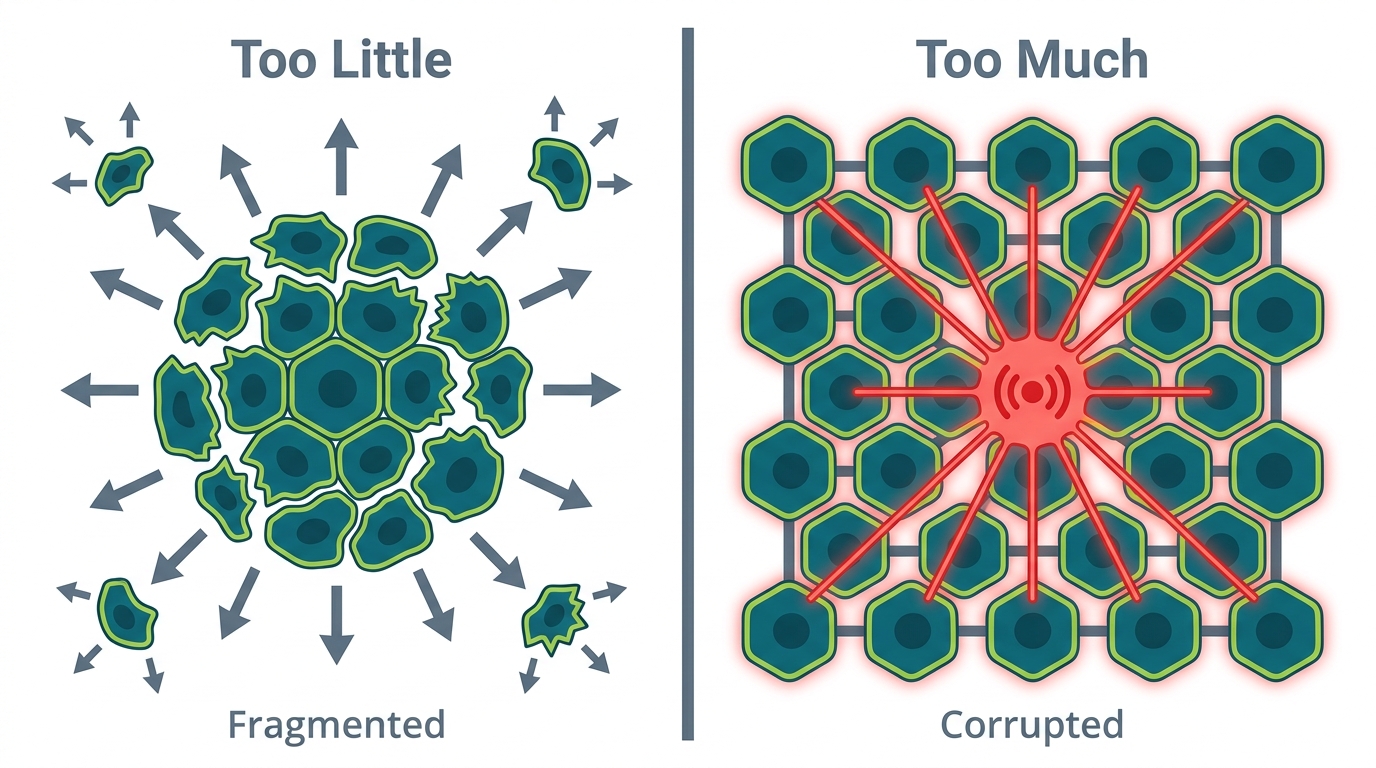
Figure 8:Under-coupled: parts defect and fragment. Over-coupled: a single bad signal corrupts everything. The optimum sits between them — and it depends on context.
There is an optimal coupling level. It is not maximum coupling. It is not minimum coupling. It is contextual — and both extremes fail badly.
Too little coupling.
When cells lose gap junction communication, they lose access to the shared state. Each cell can only see what it directly senses. The tissue loses coherence. Local cells start making decisions based on local information only, without correction from the wider context.
This is how de-integration starts. A cell that cannot receive tissue-level error signals cannot know when its own behavior is out of range. It optimizes locally. Its “circle of caring” — the cognitive light cone described in Chapter 3 — collapses inward. It begins to act like an independent agent rather than a citizen of the tissue.
Cancer is one result. So is immune deficiency in some contexts: T-cells that cannot gap-couple to neighboring tissue cells may miss signals that should suppress inflammatory response.
Too much coupling.
Over-coupling is less obvious but just as dangerous. Consider the heart during a lethal arrhythmia. The problem is not that cells fail to communicate — it is that a corrupted electrical signal propagates perfectly across the whole organ, with no local damping, no local independence to absorb the error. The signal spreads everywhere because the coupling is tight, and the whole organ locks into a dysfunctional rhythm.
Seizures in the brain follow similar logic. Normal neural function requires some isolation between regions — local circuits that can run their own computation without the whole brain entrained to one signal. Hyper-synchrony, when coupling is too strong, collapses regional independence and produces the runaway global pattern of a seizure.
6Multi-Agent AI as a Coupling Problem
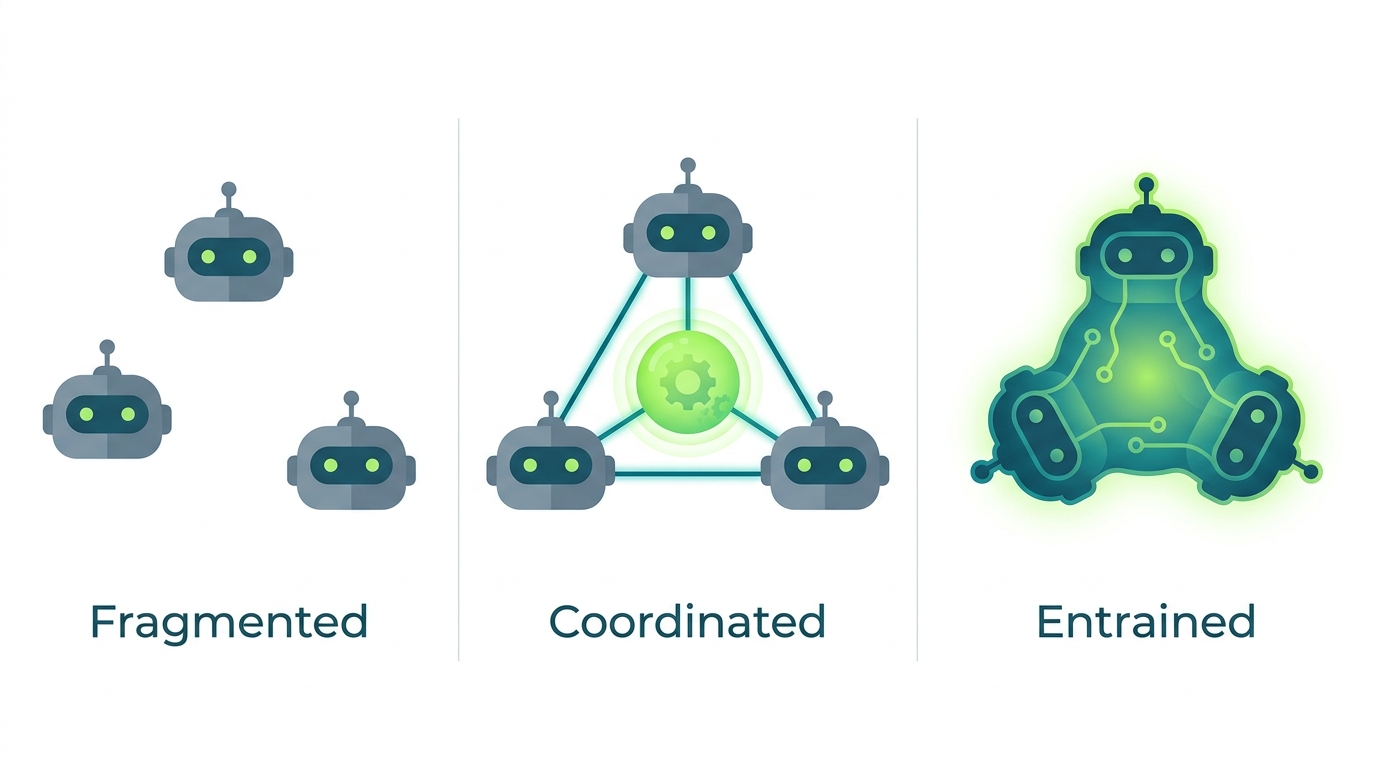
Figure 9:Three coupling levels for a team of AI agents. Each has different strengths and different failure modes — mirroring the biology exactly.
Here is the engineering version of everything above.
You have three AI agents working on a task: one searches the web, one reads and summarizes documents, one drafts a report. How do they share what they know?
Option 1: No shared state. Each agent starts fresh. The searcher finds sources. The orchestrator passes them to the summarizer. The summarizer passes summaries to the drafter. Information flows in one direction only. The drafter cannot ask the searcher a follow-up. The summarizer cannot warn the drafter that source three is unreliable. Each agent is isolated — a colony. The “individual” is the orchestrator, doing all the integration manually.
Option 2: Shared context window or memory store. All three agents read from and write to a shared scratchpad. The searcher writes findings. The summarizer annotates them. The drafter sees everything. When the drafter notices a gap, it flags it for the searcher to fill.
This is gap-junction-style coupling. State is shared in a pool no agent owns. The pool is non-attributable — a piece of knowledge in the shared context carries no permanent tag saying which agent put it there. The team behaves more like one agent.
Option 3: Full state fusion. One massive context window with every agent’s full reasoning visible to every other in real time.
This is over-coupling. One confused agent that writes garbage to the shared context infects every other immediately. A hallucination in the searcher becomes a confident fact in the summarizer becomes a false claim in the report — because the coupling was tight and no local damping existed.
The bandwidth of the channel between agents directly determines what kind of individual the agent team is.
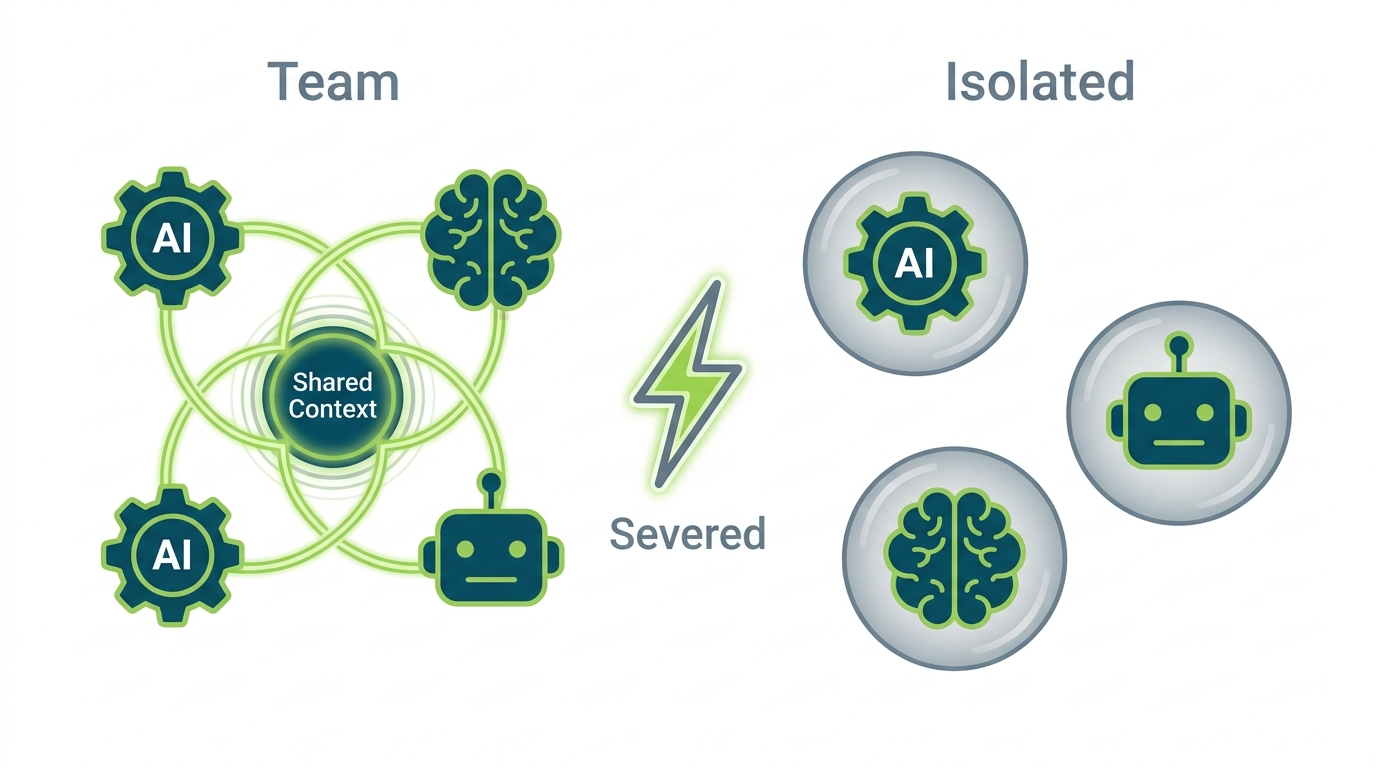
Figure 10:Sever the shared channel and one team becomes three. Same agents, different coupling — different individual.
A team with no shared state is a colony. Each agent is its own individual. The orchestrator is not an organism — it is a dispatcher.
A team with shared, writable, readable state is an organism. The team’s decisions reflect a common pool. Local agents can correct each other without going through a central bottleneck.
And just like the biology: cut the shared channel and one team becomes many.
Configuration | Biological analog | Strength | Failure mode |
|---|---|---|---|
No shared state | Ant colony (pheromone only) | Each agent is independently auditable | Cannot coordinate across steps; orchestrator bottleneck |
Shared scratchpad | Organism with gap junctions | Coherent across steps; agents can correct each other | Noisy agents pollute shared context; harder to audit individual contributions |
Full state fusion | Over-coupled tissue (arrhythmia) | Maximum awareness | One bad signal corrupts everyone instantly; no local damping |
7Designing the Right Amount of Glue
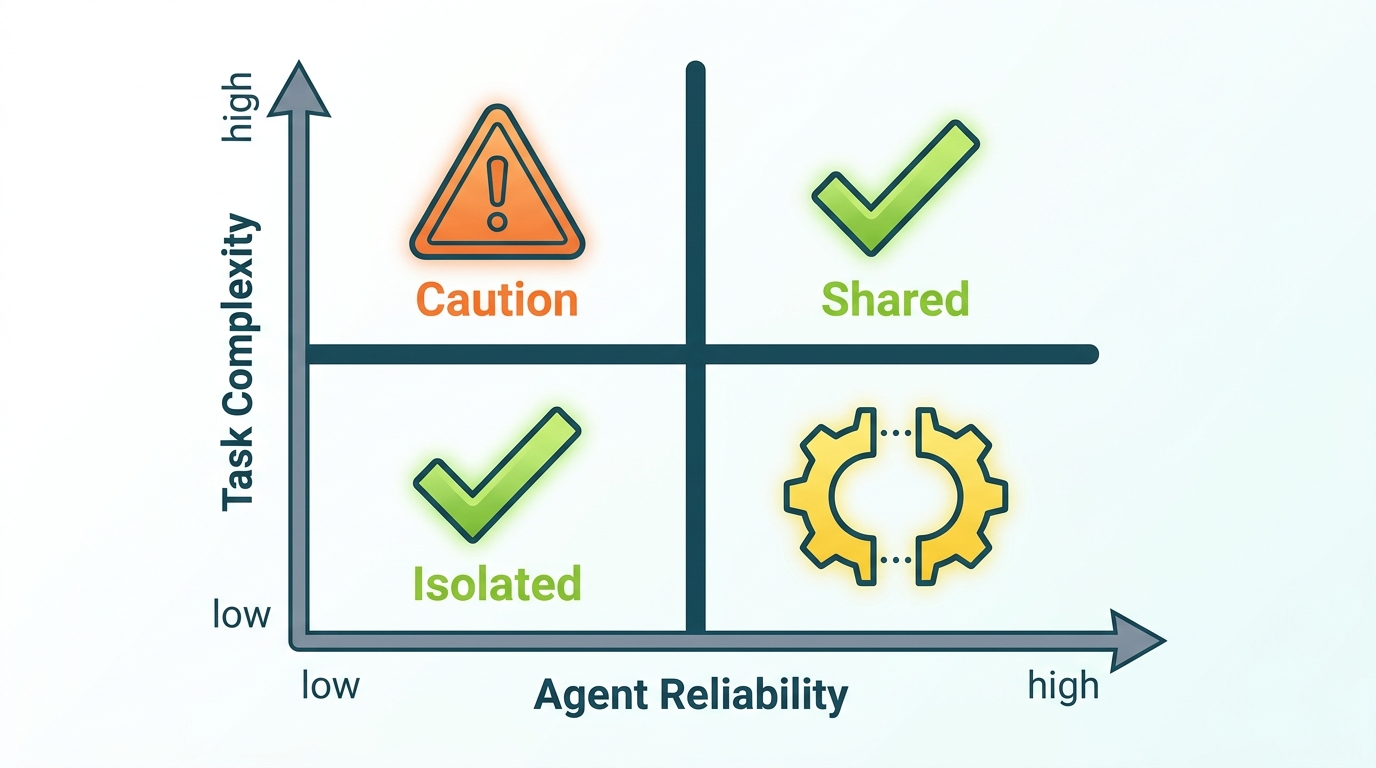
Figure 11:Task complexity and agent reliability together determine the right coupling level. Simple reliable tasks need little glue. Complex unreliable tasks need structured coupling with damping.
There is no universal answer. But there is a decision process.
Step 1: What does the task require?
If sub-tasks are genuinely independent, use minimal coupling. Isolated agents are easier to audit, easier to replace, easier to parallelize. Right choice for “translate this document into five languages simultaneously.”
If sub-tasks build on each other and the final output must be coherent, you need shared state. The question is how much.
Step 2: How reliable are your agents?
If agents hallucinate frequently, tight coupling is dangerous. A shared scratchpad will propagate the error. You need local damping — some mechanism by which an agent’s output is verified before entering the shared pool. Biology handles this through redundancy: multiple cells send the same signal and outliers are suppressed. You can engineer the equivalent.
If agents are reliable and narrow, tighter coupling is safe.
Step 3: What gets severed when communication fails?
This is the most important question most teams never ask. If the shared context window is cleared, what breaks? Design checkpoints — periodic snapshots of the shared state that survive context resets. Know which cuts are survivable before they happen.
Use isolated, no-shared-state agents when:
Sub-tasks are parallel and independent
Agents are highly specialized (narrow scope, low hallucination)
You need clean audit trails for each agent
Errors should be contained, not broadcast
Use shared-context or shared-memory agents when:
Sub-tasks build on each other
The final output must be coherent across all contributions
You can afford agent-to-agent correction
You have hallucination-damping mechanisms (verification layer, redundancy)
What about hierarchical message passing — is that the same as gap junctions?
Not quite. A message-passing architecture is more like the extracellular space in biology: agents release signals, the bus carries them, other agents pick them up. The signal is attributable — you know which agent sent which message. That gives you auditability. It costs you speed.
Gap junction coupling is faster and less attributable. The engineering equivalent is a shared writable memory space — a live database table or a shared section of a context window — rather than a message queue. Message queues are extracellular. Shared memory is gap-junction-style.
Both are useful. The right choice depends on whether you need attribution or coherence.
The shared scratchpad is the gap junction of the agent team. All agents read from it and write to it. No entry is permanently owned. Decisions emerge from the pool, not from any single agent.
8🤔 Think About It
You are running five AI agents on a high-stakes legal research task. The final brief must be accurate and internally consistent.
You design a shared scratchpad. All five agents can read and write to it. Three days go well.
On day four, one agent makes a confident factual error and writes it to the scratchpad. The other four read it, accept it, and build on it. The final brief contains the error — compounded by four agents who cited it as established fact.
This is biological over-coupling. A corrupted signal propagated perfectly.
Now redesign the system. You cannot eliminate the shared scratchpad — the task requires coherence. You cannot make agents infallible — they are large language models.
What mechanisms would you add to damp error propagation without severing coupling? Think about redundancy, voting, verification layers, confidence tags, and expiration times. Work through at least two mechanisms and trace the failure mode of each.
9💬 Discussion
Prompt: The chapter argues that selfhood is manufactured by information sharing — and that it comes in degrees. Think of a human institution that works this way: a company, a school, a sports team, a family. Describe the “gap junctions” of that institution — the channels that share state between members in real time. What happens when those channels are severed (remote work, illness, conflict)? And is there a point at which the institution loses its individuality — where it goes from being one thing to being many separate parts?
Discussion Guidelines
Support your main post with at least one credible source, cited.
Reply to at least two classmates with substantial feedback — extend, challenge, or add evidence. “I agree” is not a reply.
10🔬 Hands-On Lab: Sever the Channel
No code needed. A browser and any AI assistant will do.
Part 1 — Build a coupled team. Open two chat windows with any AI assistant. Pick a research question: “What are the three best arguments for and against a four-day workweek?” Run both in parallel. After each produces a first response, copy the key claims into a shared document — a simulated scratchpad. Tell each assistant what the other found. Ask them to continue.
Part 2 — Observe coupling. Notice how each assistant’s second response changes when it sees the other’s work. Does it agree? Correct? Add something new? This is shared-state coupling.
Part 3 — Sever. Run the same task with both assistants isolated — no shared document. Compare the final outputs. Where do they diverge?
Part 4 — Reflect. Write one paragraph: what did the shared scratchpad do that no amount of better prompting could have done? What did it break?
Group Build:
Use AI to identify a real problem in your own context.
Use AI to develop a solution to it.
Be ready to tell the class: what problem, how AI helped, what the solution looks like, and what the AI got right or missed.
11🐍 Optional Advanced Lab: Simulating Coupling Dynamics

You will simulate a network of simple agents sharing state through a coupling matrix. Start with ten agents and a tunable coupling weight. Each agent holds a value that drifts randomly. With zero coupling, agents drift apart. With full coupling, one corrupted agent drags the others. Find the coupling level that maximizes coherence while containing error propagation.
12🎯 In-Class Assignment: Mapping the Glue (10 pts)
Details and instructions will be provided in class.
Points: 10
13📖 Glossary
Term | Definition |
|---|---|
Gap junction | A direct protein channel connecting the cytoplasms of two adjacent cells, allowing ions and small molecules to pass without entering the extracellular space. The physical substrate of tight cellular coupling. |
Connexon | A hemichannel made of six connexin proteins. Two connexons, one from each cell, dock to form a complete gap junction channel. |
Connexin | A family of proteins that form connexons and gap junction channels. Different connexin types produce channels with different size selectivity and regulatory properties. |
Non-attributable state | A signal or record in a shared pool whose origin cannot be identified by any member of the pool. Gap-junction-coupled cells share non-attributable electrical state — neither cell can tell which one originated a given voltage change. |
Individuality (biological) | The property of acting as a unified goal-pursuing agent. In the TAME framework, individuality is not a fixed property of an organism’s boundary but a function of how much state is shared between its parts. |
Coupling strength | The rate and completeness with which state is shared between agents. High coupling strength means changes propagate fast and fully. Low coupling strength means agents remain relatively independent. |
Bandwidth ladder | The ordered spectrum from loose-coupled colonies (slow, sparse state sharing) through intermediate systems (slime mold, cytoplasmic flow) to tightly coupled organisms (gap junctions, near-instantaneous propagation). |
Bioelectric signaling | The use of ion flows and voltage gradients to carry information across cells and tissues. Gap junctions are one of the primary routes for bioelectric signals to spread through a tissue. |
Binding problem | The question of how separate signals are unified into one coherent experience or action. Gap-junction-mediated memory sharing is one physical answer. |
De-integration | Loss of responsiveness to shared pool signals. A de-integrated cell runs its own local goals without correction. Cancer is the classic example. |
Shared scratchpad | In AI multi-agent systems, a writable shared memory space all agents can read and update. State pools and becomes non-attributable — the engineering analog of gap-junction coupling. |
Isolated agent | An agent sharing no state with others. Fully autonomous, unable to coordinate beyond explicit message passing. |
Hallucination propagation | A confident error spreading from one agent to others through a shared context. The AI equivalent of a corrupted signal in over-coupled tissue. |
Error damping | Any mechanism limiting local error spread before it reaches the shared pool. Biology uses redundancy and statistical averaging. Engineering equivalents include verification layers and confidence tagging. |
Hyper-synchrony | A pathological state where over-coupling locks all agents into one rhythm, eliminating local independence. Cardiac arrhythmia and seizures are biological examples. |
Cognitive light cone | The range across space and time that an agent’s goals can reach. Introduced in Chapter 3. Coupling expands individual cells’ effective light cone. |
14🔑 The Takeaway
Individuality is manufactured by information sharing. The boundary of the self is the boundary of the shared state.
Gap junctions are physical tubes between cells — cytoplasm to cytoplasm, no delay, no interception.
When signals mix in a shared pool, they become non-attributable. That shared, non-attributable pool is what we call a self.
Cut the coupling and one organism becomes two. Demonstrated in flatworms by altering bioelectric coupling before severing.
Individuality comes in degrees. An ant colony is loosely coupled. A slime mold is intermediate. Heart muscle is tightly coupled. Bandwidth determines degree.
Both extremes fail. Too little coupling fragments. Too much coupling lets one bad signal take down everything.
AI agents with no shared state are a colony. Agents with a shared scratchpad are an organism. Cut the scratchpad and one team becomes many.
Design coupling for your noise environment, not for maximum coherence.